Vijay Mallya Informs Bombay High Court He Cannot Return to India Due to Legal Restrictions
Fugitive businessman Vijay Mallya has officially informed the Bombay High Court that he is unable to specify a date for his return to India. This declaration comes as a direct response to the court's recent insistence that it would not proceed with hearing his petitions unless he physically returns to the country.
Legal Barriers Preventing Return to India
In a detailed statement submitted through his senior counsel, Amit Desai, Mallya outlined the significant legal obstacles preventing his return. Firstly, his Indian passport was revoked by the government in 2016, leaving him without valid travel documentation. More critically, courts in England and Wales have issued explicit orders prohibiting him from leaving the United Kingdom.
"Mallya is not permitted to leave or attempt to leave England and Wales or apply for or be in possession of any international travel document. In any event, the petitioner is unable to precisely state when he will return to India," Desai read from the statement during the court proceedings.
Court's Stance and Mallya's Petitions
The submission follows a clear directive from a bench comprising Chief Justice Shree Chandrashekhar and Justice Gautam Ankhad. Last week, the bench made it unequivocal that it would not entertain Mallya's pleas challenging his fugitive economic offender status unless he returns to Indian soil. The court had specifically asked Mallya to clarify his intentions regarding returning to the country.
Mallya, who has resided in the UK since departing India in March 2016, has filed two significant petitions before the Bombay High Court:
- One petition challenges the order that declared him a fugitive economic offender.
- The second petition questions the constitutional validity of the Fugitive Economic Offenders Act itself.
Legal Arguments Against Physical Presence Requirement
During the hearing, Desai presented a compelling legal argument against the necessity of Mallya's physical presence in India for the court to hear his cases. He contended that Mallya's appearance would actually render the proceedings irrelevant under the statute.
"If he (Mallya) were to appear in India, then all these proceedings would be rendered irrelevant as the statute says that once the offender appears in the concerned court of law, then all these orders would be set aside," Desai explained to the court.
Background of the Fugitive Economic Offender Case
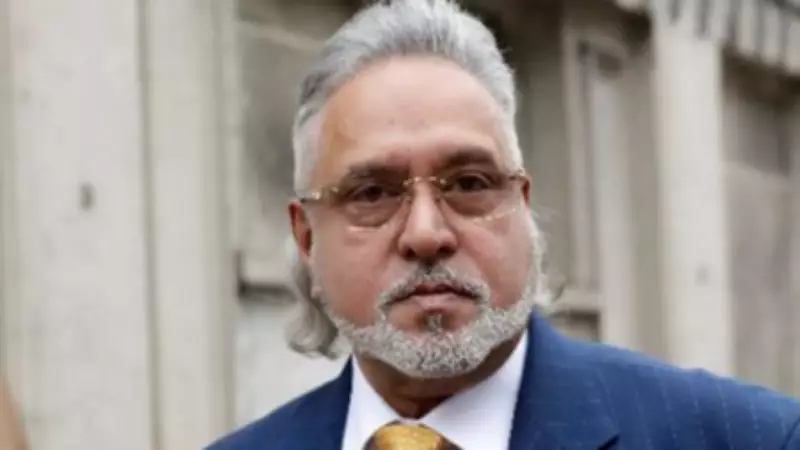
Vijay Mallya, now 70 years old, faces multiple serious allegations of fraud and money laundering. These cases are directly linked to the default of loans amounting to several thousand crores of rupees. His legal troubles reached a critical point in January 2019 when a special court hearing cases under the Prevention of Money Laundering Act officially declared him a Fugitive Economic Offender.
The Bombay High Court has now directed the Union government to file its formal reply to Mallya's detailed statement regarding his inability to return. The matter has been scheduled for further hearing next month, marking another chapter in this prolonged legal saga that spans international borders and involves complex jurisdictional questions.