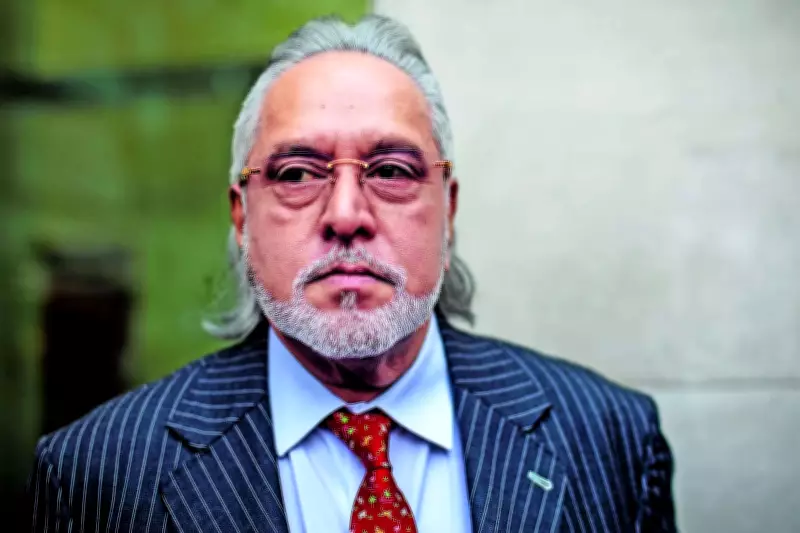
Vijay Mallya's Legal Team Cites UK Court Restrictions in Bombay High Court Hearing
The legal representatives for Vijay Mallya, founder of the now-defunct Kingfisher Airlines, have formally informed the Bombay High Court that he is "unable to precisely state when he will return to India". This declaration was made in a statement submitted by his solicitors, Kanga and Company, during a recent court proceeding. The statement emphasized that Mallya is currently bound by orders from courts in England, which explicitly prohibit him from leaving or attempting to leave England and Wales. Furthermore, he is barred from applying for or possessing any international travel documents, effectively restricting his mobility.
High Court Scrutinizes Mallya's Compliance and Legal Arguments
Senior counsel Amit Desai, representing Mallya, presented the solicitors' statement before a bench comprising Chief Justice Shree Chandrashekhar and Justice Gautam Ankhad. The bench noted that the submitted note was not a signed affidavit, raising questions about its formal validity. In response, the Union Home Ministry filed a fresh affidavit on Tuesday, challenging Mallya's previous affidavit dated February 10. The ministry argued that this affidavit did not conform to the High Court's December order, which had specifically demanded clarity on when Mallya would return to India.
The affidavit from Mallya, affirmed in London, contended that he had made bona fide offers of settlement and highlighted a disclosure by the Union Finance Ministry in the Lok Sabha. This disclosure indicated that banks had recovered Rs 15,006 crore against Kingfisher Airlines' borrowings, a figure that exceeds the Rs 6,200 crore debt recorded by the Debt Recovery Tribunal in 2017. Mallya's legal team argued that this recovery undermines the necessity of his physical presence in India for legal proceedings.
Constitutional Challenges and Extradition Proceedings
Mallya's petition challenges the constitutionality of certain provisions of the Fugitive Economic Offenders (FEO) Act. His lawyers cited a November 2025 Supreme Court order that permits individuals declared as fugitive economic offenders and absconders to be represented by lawyers in India while remaining physically outside the country. They asserted that Mallya is entitled to contest the validity of the FEO Act without being in India. Additionally, they requested that his petitions—one challenging the special trial court order declaring him an FEO, and the other challenging the FEO provisions—be heard separately to ensure a fair legal process.
Representing the Centre, solicitor general Tushar Mehta and additional solicitor general Anil Singh, accompanied by Enforcement Directorate counsel Prashant Mishra, reiterated that Mallya has been absconding since March 2, 2016. He was officially declared a "fugitive offender" by a special court in January 2019, leading to the initiation of extradition proceedings. These proceedings are currently at an advanced stage in the United Kingdom. Mehta emphasized that once Mallya is extradited or chooses to return voluntarily, he will be dealt with strictly under Indian laws and the Constitution.
High Court's Directions and Future Hearings
During the hearing, the High Court initially showed an inclination to dismiss Mallya's petition. However, after Desai persuaded the bench otherwise by arguing that Mallya's assets have been seized and he is legally restrained from leaving England or holding a passport, the court refrained from dismissal. Instead, the bench directed Mallya to file a fresh affidavit that reiterates the written statement and comprehensively details the orders passed by courts in England that restrict his movement.
The Enforcement Directorate is required to file its affidavit in rejoinder following Mallya's submission. The High Court has scheduled the next hearing for March 11. In an oral remark, the bench observed that Mallya has taken no substantive steps since filing his petition in 2019 to expedite its hearing, highlighting delays in the legal process.