

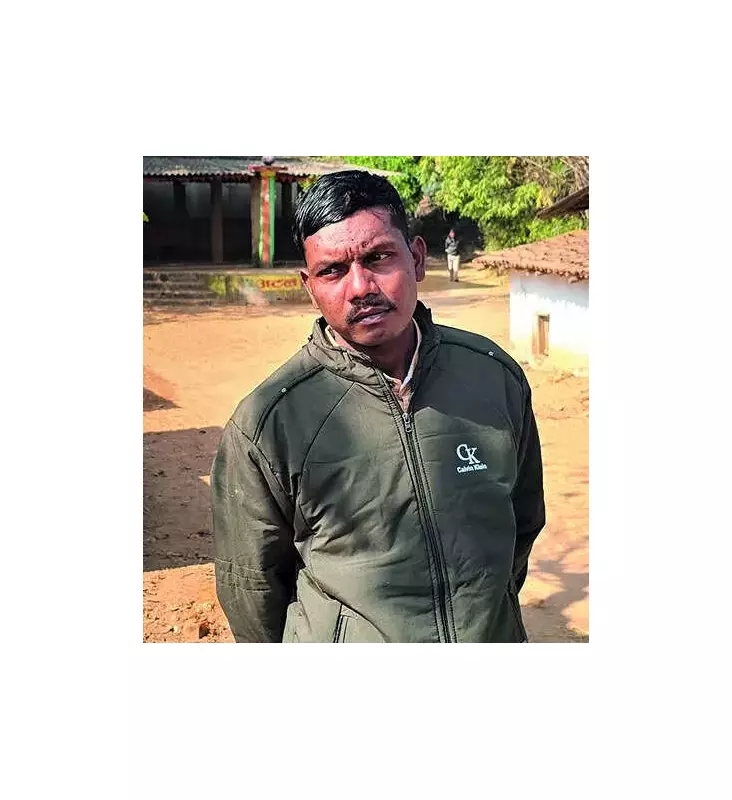
Dead Man Walks Home, Exposes Flawed Police Probe in Chhattisgarh
In an incident that reads like a plot from a thriller, the police and administration in Chhattisgarh's Jashpur district have been left utterly confounded. A man, officially declared murdered and cremated nearly two months ago, has returned home alive, throwing a meticulously built murder case into complete disarray and raising severe questions about investigative procedures.
A Grisly Discovery and a Family's Tragic Identification
The bizarre saga began sixty-one days ago in the Turitongri jungle, between Purananagar and Balachhapar. A half-burnt, charred body was discovered in a forest pit, its face and torso badly disfigured by fire. The Jashpur police registered a case, conducted a spot inspection, and sent the remains for autopsy. The post-mortem report concluded it was a homicide, prompting the registration of a murder case.
During the investigation, police learned that a local villager from Sitonga, Simit Khakha, had recently travelled to Hazaribagh in Jharkhand for wage work but had not returned with his friends. When the severely burnt corpse was shown to Simit's family, his parents and brother, under distressing circumstances, identified it as his. This official identification became the cornerstone of the entire case.

A "Watertight" Case Built on Confessions
Acting on this, the police pieced together a sequence of events. They alleged that on October 17, Simit returned to Jashpur with companions Ramjeet Ram, Virendra Ram, and a minor. After consuming alcohol near the Banki river culvert, a dispute over commission money erupted. The police claimed Ramjeet stabbed Simit, and Virendra attacked him with an iron rod, killing him instantly.
To destroy evidence, the accused allegedly carried the body 400 metres into the forest, dumped it in a pit, doused it with petrol, and set it ablaze. The police even conducted a "scene of crime recreation" with forensic experts. Based on what they termed as confessions from the accused, who repeated the events before a judicial magistrate, four individuals—Ramjeet, Virendra, the minor, and later two more associates, Sheetal Minj and Jeetu Ram—were arrested and sent to judicial custody. Notably, no DNA test was conducted to conclusively match the body with Simit.
The Stunning Return and a Case Collapse
The entire investigation imploded on Sunday. Simit Khakha, the supposed victim, walked into the Kotwali police station in Jashpur alive and well. He was accompanied by Sitonga's sarpanch, Kalpana Khalkho.
Khalkho recounted that Simit had alighted from a bus from Jharkhand and hired an auto-rickshaw to go to Sitonga. The alert auto driver, who recognised him and knew several villagers were jailed for his "murder," immediately informed the sarpanch. Simit was then taken straight to the police station.
There, Simit told the police he had gone to Jharkhand for work. After reaching Ranchi, he got separated from his friends and took up farm labour in Giridih district. He did not have a mobile phone, which prevented him from contacting his family. He claimed he was returning home to celebrate Christmas when he discovered he had been declared dead and his friends jailed for his murder. He stated he had no knowledge of the charred body or the murder case.
Unanswered Questions and a New Probe
With Simit alive, troubling questions now haunt the Jashpur police. As highlighted by social worker Ramesh Sharma, the authorities must answer: Who was the real victim? Why did Simit's family identify the burnt body as his? Whose murder did the accused confess to, and under what circumstances?
Senior Superintendent of Police Shashi Mohan Singh announced that a Special Investigation Team (SIT) under a gazetted officer has been formed to establish the real identity of the deceased. He defended the earlier arrests, stating they were based on circumstantial evidence, including the family's ID, post-mortem findings, and judicial confessions.

Legal procedures are now being initiated to secure the release of the five jailed individuals. Meanwhile, the probe has been widened. Police are contacting neighbouring Jharkhand and Odisha to scan missing-persons records, suspecting the charred body may belong to an untraced individual from another area.
This shocking turn of events has put a glaring spotlight on police investigation standards, especially in cases where a body is burnt beyond recognition. The failure to mandate a DNA test before making arrests and filing charges has led to a grave miscarriage of justice, leaving a community in shock and the police force facing intense scrutiny.





