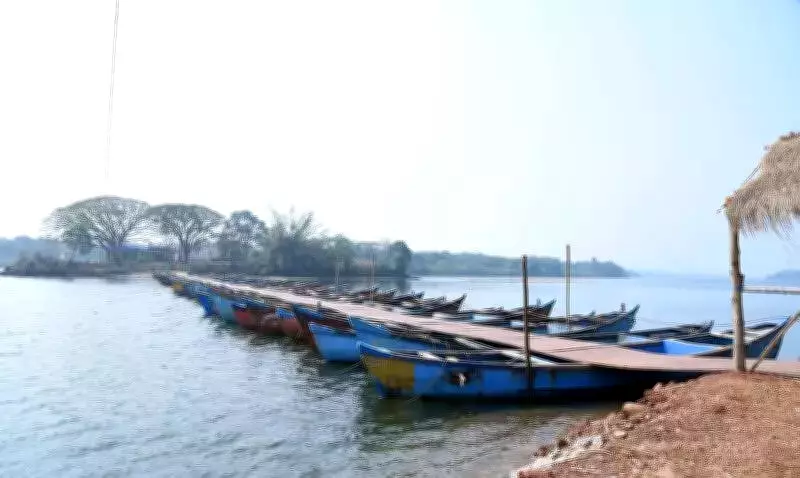
In Mangaluru, the long-standing wait for a permanent bridge has left thousands of devotees and visitors to the historic Dargah Sharif at Rahmaniya Masjid, commonly known as Nadupalli Maqam, relying on temporary solutions to access the sacred site. Located on an island formed by the Nethravati river at Adyar Kannur in Mangaluru taluk, the shrine has become increasingly difficult to reach as the water stream has expanded over the decades, transforming what was once a narrow crossing into a 100-meter-wide river that now requires boat transport.
Years of Petitions and Temporary Measures
For more than five years, local villagers have been actively petitioning various government authorities, demanding the construction of a bridge to provide a safe and reliable connection to the mainland. Despite these efforts, a lasting solution remains elusive, forcing the Rahmaniya Masjid committee to take matters into their own hands. As a result, they have initiated the setup of a pontoon bridge, constructed using nearly 60 traditional boats, specifically for the upcoming uroos scheduled for January 31 and February 1. This marks the fifth consecutive year that this makeshift bridge has been installed, highlighting the persistent nature of the infrastructure gap.
Significance of Nadupalli Uroos and Pilgrim Traffic
The two-day annual Nadupalli Uroos is a major event that attracts no less than 50,000 people from regions including Dakshina Kannada, Kodagu, and Hassan within Karnataka, as well as Kerala's Kasargod district. The masjid itself is a prominent pilgrim center with a rich history spanning over 400 years, drawing devotees from diverse religious backgrounds. Typically, visitors reach the dargah, which is situated 100 meters from the mainland, by boat. However, during the uroos, when crowds swell into the thousands, the committee erects the pontoon bridge to facilitate easier access and enhance convenience for all attendees.

Daily Operations and Historical Context
Currently, a daily boat service operates from Adyar Kannur to ferry devotees to the masjid, as confirmed by Abdul Hameed, president of the Usman Bin Affan Masjid, which operates under the Rahmaniya Masjid in Borugudde. He explained that in the past, nearly 20 boats equipped with outboard engines were used for transportation. Over time, as footfall increased significantly, the masjid committee made the decision to construct the pontoon bridge during uroos to manage the influx more effectively. Historically, the site was easier to access by foot when only a narrow stream separated the island from the mainland, but natural changes have necessitated the current reliance on water-based transport.
Cultural and Religious Importance
The Dargah Sharif holds deep cultural and spiritual significance, with devotees from all faiths bringing offerings such as rice, coconut, jaggery, and sugar. During the uroos, the shrine distributes 'bella ganji,' a sweet dish made from rice and jaggery, to all visitors, symbolizing community and devotion. Residents note that the three tombs at Nadupalli Maqam were built in commemoration of religious preachers, and the site gained prominence after villagers reported witnessing miracles, leading to the establishment of regular prayers and pilgrimages.
This ongoing reliance on temporary structures underscores the urgent need for infrastructure development to support the growing number of pilgrims and ensure their safety. As the community continues to advocate for a permanent bridge, the annual installation of the pontoon bridge serves as a testament to their resilience and dedication to preserving this centuries-old tradition.