

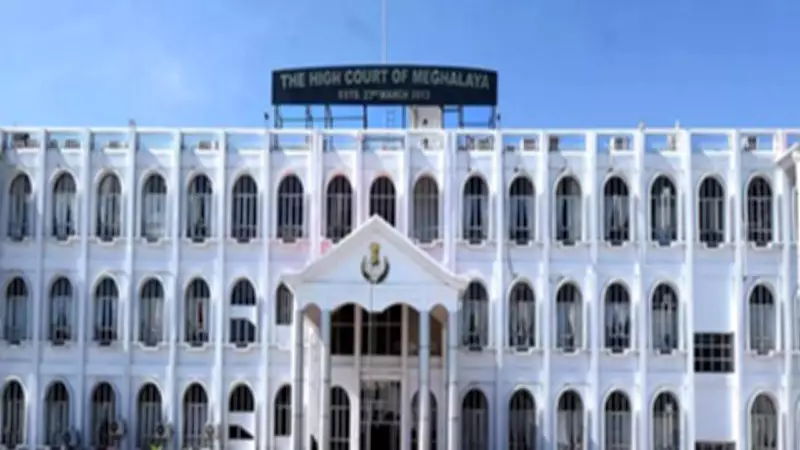
Meghalaya High Court Overturns Controversial ST Certificate Mandate for District Council Polls
The Meghalaya High Court delivered a landmark verdict on Wednesday, striking down a contentious notification that made the submission of Scheduled Tribe (ST) certificates mandatory for candidates filing nominations for the Garo Hills Autonomous District Council (GHADC) elections. This judicial intervention aimed to defuse escalating tensions in West Garo Hills, where violent clashes had erupted between the local tribal community and supporters of non-tribal political aspirants.
Elections Postponed Amid Unrest and Violence
In response to the court's decision and the deteriorating law-and-order situation, the Conrad Sangma-led National People's Party (NPP) government announced the postponement of the April 10 elections to the 29-seat autonomous council. The GHADC administers all five districts of the Garo Hills region. Chief Minister Sangma, in a video message, cited the volatile circumstances, including violent incidents that claimed two lives early Monday, as the primary reasons for putting the electoral process on hold.
"We will sit and decide how to take this procedure ahead," Sangma stated, emphasizing the need for careful deliberation before proceeding with the polls. The government's decision reflects the gravity of the situation, which has seen mobs torch the NPP office in Tura, pelt stones at the Superintendent of Police's office, and engage in clashes with police personnel. Curfew measures and an Army flag march were implemented to restore order.

Chief Minister's Defiant Stance and Security Concerns
Late Wednesday evening, Chief Minister Sangma issued a stark statement revealing that he had received intelligence about a group planning to attack his family and burn down his residence in Tura. "In accordance with protocol, I was advised to relocate, but I refused. I am not afraid. My life rests in the hands of the Lord," he declared. Drawing strength from his heritage, Sangma added, "As an A·chik (Garo), I draw courage from the legacy of PA Sangma (the CM's late father and former Lok Sabha Speaker), and remain committed to serving my people with integrity."
Sangma condemned the attacks on government properties, places of worship, and private homes as "unacceptable" and vowed that such acts would be dealt with appropriately. The violence has had a cascading effect, prompting the Meghalaya Board of School Education to cancel the Higher Secondary School Leaving Certificate (HSSLC) examinations scheduled for March 11 and 12 in West Garo Hills, with fresh dates to be announced later.
Judicial Reasoning and Broader Implications
Justice Hamarsan Singh Thangkhiew, while quashing the notification that sparked the unrest, highlighted the complex legal and social dimensions of the issue. He noted that the participation of non-tribals in elections to district councils, which were "primarily established" for the benefit of Scheduled Tribes, had ignited a "fierce debate." The violent fallout necessitated judicial intervention to uphold constitutional principles and maintain public order.
The court's ruling came on a petition filed by politician Enamul Hoque, challenging the ST certificate requirement. This decision underscores the delicate balance between protecting tribal rights and ensuring inclusive democratic processes in autonomous tribal councils. The postponement of the GHADC elections marks a significant pause in Meghalaya's political landscape, as authorities grapple with reconciling legal mandates with ground-level realities in the ethnically diverse Garo Hills region.






