

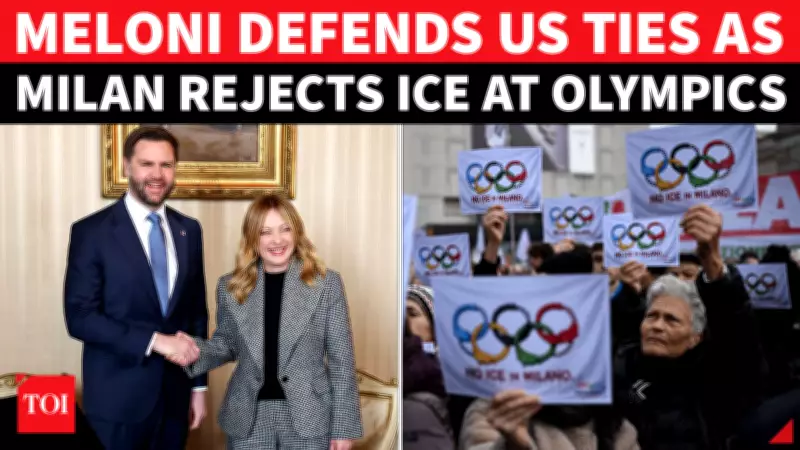
Meloni Dismisses 'Surreal' Public Fury Over US ICE Agents at Milan Winter Olympics
As the Winter Olympics commenced in Milan, Italy, a significant political controversy erupted far from the athletic competitions on ice and snow. Prime Minister Giorgia Meloni has publicly downplayed the growing public anger regarding the presence of U.S. Immigration and Customs Enforcement (ICE)-linked personnel, labeling the concerns as "surreal." She firmly insisted that these American agents hold no enforcement powers on Italian soil, emphasizing their role is strictly advisory within the framework of Olympic security protocols.
Protests Flood Milan Streets Amid Security Concerns
Despite Meloni's reassurances, hundreds of protesters took to the streets of Milan, voicing strong opposition to what they perceive as the government importing repression and silencing dissent under the guise of Olympic security. The demonstrators expressed fears that the involvement of US ICE personnel, known for their controversial immigration enforcement actions in the United States, could lead to similar practices in Italy, undermining civil liberties and human rights.
The protest movement has gained momentum as the Italian government deployed thousands of security forces and approved new detention powers to ensure safety during the Games. Critics argue that these measures, combined with the presence of foreign enforcement-linked agents, are transforming the Olympics into a test case for shrinking civil liberties on a global stage.

Clash Between Alliance Politics and Olympic Ideals
This situation exposes a sharp clash between alliance politics, public protest, and the traditional ideals of the Olympic Games. On one hand, Italy's alignment with the United States, particularly under the Trump administration's policies, has led to this security collaboration. On the other hand, the influx of world leaders and international attention has amplified concerns about the potential erosion of democratic freedoms in the name of security.
Protesters and civil rights advocates warn that the Milan Winter Olympics could set a dangerous precedent, where international sporting events become platforms for expanding state surveillance and control. They point to the irony of hosting an event meant to celebrate global unity and athletic excellence while implementing measures that may suppress dissent and limit personal freedoms.
Government's Stance and International Implications
Prime Minister Meloni's administration maintains that the security arrangements, including the involvement of US personnel, are necessary to protect athletes, spectators, and dignitaries from potential threats. They argue that the measures are proportionate and in line with international standards for major events. However, the public outcry suggests a deep-seated mistrust and anxiety about the implications of such collaborations.
As the Games progress, this controversy is likely to remain a focal point, highlighting the tension between national security interests and the preservation of civil liberties. It also raises questions about how host countries balance their international alliances with domestic public sentiment, especially in an era of heightened geopolitical tensions.
In summary, the Milan Winter Olympics have become more than just a sporting spectacle; they are now a battleground for debates over freedom, security, and the role of international partnerships in shaping domestic policies. The outcome of this clash could have lasting effects on how future global events are managed and perceived worldwide.

