Cartel Leader's Death Raises Alarm for Mexico's World Cup 2026 Security
The recent military operation that resulted in the death of notorious cartel leader Nemesio Oseguera Cervantes, widely known as "El Mencho," has ignited significant safety concerns in Mexico. This development comes at a critical juncture, merely months before the country is scheduled to host matches for the prestigious FIFA World Cup 2026. The violent incident occurred in the mountainous terrain near Tapalpa within the state of Jalisco, a region earmarked for World Cup festivities.
Violent Aftermath and Tourism Industry Anxieties
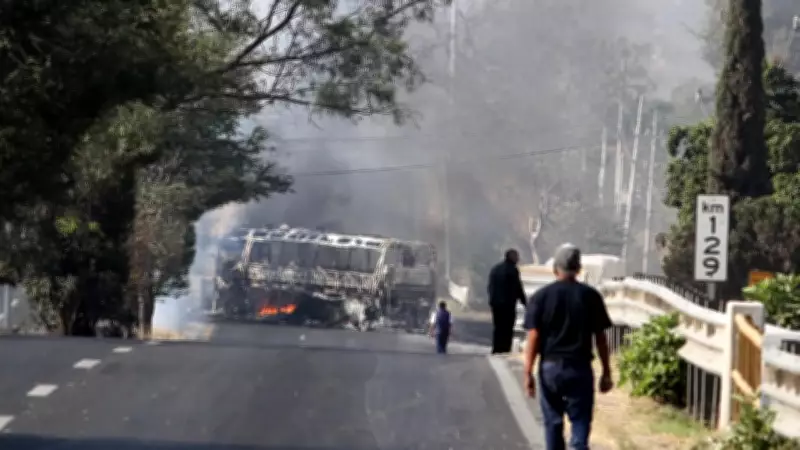
Official reports confirm that more than seventy individuals lost their lives during the intense military action and its chaotic aftermath. This surge in violence has sent shockwaves through the local tourism sector, with business owners across Jalisco expressing deep apprehension. Many fear that the global media spotlight on Mexico's security situation could severely impact travel plans for the upcoming football tournament, one of the world's most watched sporting events.
Mexico is poised to host several key matches of the 2026 World Cup, including games in the major city of Guadalajara. The nation anticipates welcoming thousands of international fans to its host cities. However, escalating clashes between Mexican security forces and the powerful Jalisco New Generation Cartel have created a palpable atmosphere of tension. Local entrepreneurs, including shopkeepers and hotel operators, now worry that widespread fear of violence might lead to a substantial decline in tourist arrivals during this global spectacle.
Details of the Operation and Immediate Fallout
Authorities detailed that Oseguera Cervantes was fatally wounded during a fierce gunfight with military personnel. He later succumbed to his injuries while being transported to a medical facility in Mexico City. The United States government, which had previously offered a substantial monetary reward for his capture, acknowledged providing crucial intelligence that supported the mission. While Mexican officials hailed the operation as a landmark victory against drug trafficking networks, local residents remain deeply concerned about potential retaliatory actions.
In popular tourist destinations like Puerto Vallarta, residents reported witnessing explosions and plumes of smoke in various parts of the city. The unrest led to flight cancellations, leaving numerous visitors stranded. A tourist from Oklahoma, interviewed by The Mid-day, shared that although he and his wife had always felt secure during previous vacations to Mexico, the current climate felt distinctly different and unsettling.
Economic Impact and Community Concerns
A local shop owner from Tapalpa voiced her distress, explaining that violence in proximity to her town could devastate small businesses that rely heavily on visitor spending. She emphasized that disturbing images from the region broadcast worldwide might prompt travelers to reconsider their itineraries. The business owner stressed that implementing significantly stronger security measures will be imperative before international football fans descend on Mexico for the World Cup.
Community members also expressed uncertainty about who truly maintains control in certain areas—government military forces or organized criminal factions. There is a prevailing concern that rival cartel groups might engage in violent power struggles to fill the vacuum left by the leader's death, potentially escalating instability.
Mexico's Dual Challenge: Security and Global Image
As the 2026 FIFA World Cup draws nearer, Mexico confronts a formidable dual challenge. The nation aims to project an image of a welcoming and secure host to the global community. Yet, the recent spate of violence has sown seeds of doubt among potential visitors and international observers. Authorities are expected to ramp up security protocols in all World Cup host cities significantly.
For local families and tourism industry workers, the collective hope is that stability will be restored promptly. Their aspiration is for the World Cup to serve as a catalyst for economic prosperity and positive international exposure, rather than an event overshadowed by security concerns that could damage Mexico's future prospects.