Middle East Airspace Shutdown Cripples Global Aviation Corridor
The closure of extensive sections of Middle East airspace on Saturday has effectively paralyzed the world's most heavily trafficked east-west flight corridor. This unprecedented shutdown has resulted in the grounding of major aviation hubs, including Dubai, and triggered the cancellation of hundreds of flights globally. Indian airlines have been compelled to suspend all operations to the region as aviation regulators issued grave warnings regarding the severe risks to civil aviation safety.
Widespread Flight Cancellations and Passenger Stranding
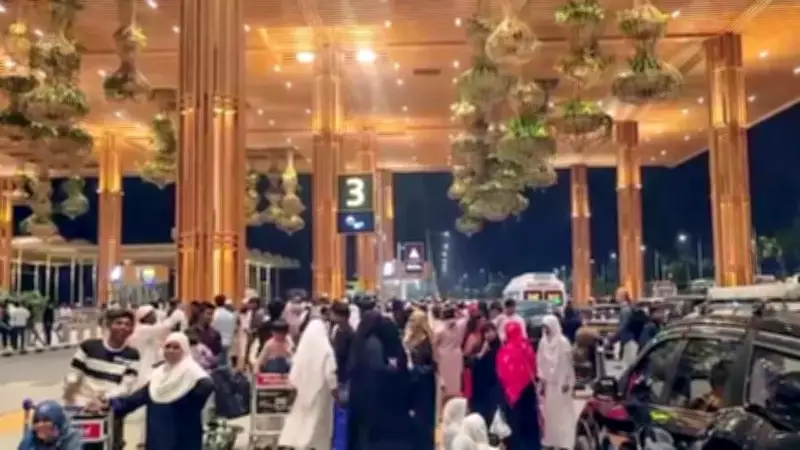
Airspace closures spanning from the United Arab Emirates to Israel have immobilized critical hubs that typically facilitate one-stop connectivity between India and Western nations. In response, Indian carriers have cancelled all flights destined for the region through at least March 2. This disruption has left tens of thousands of passengers stranded at airports worldwide, with Dubai International Airport experiencing significant schedule collapses and passenger distress.
Data from aviation analytics firm Cirium reveals that nearly 900 flights operated by Middle Eastern airlines were cancelled on Saturday alone. The cancellations were led by major carriers including the Emirates Group, Qatar Airways, and Etihad Airways. Consequently, numerous aircraft and flight crews from Indian airlines are now stranded across various locations in the Middle East. Air India is actively working to repatriate its staff from Tel Aviv amidst the ongoing crisis.

Severe Impact on Indian Aviation and Soaring Fares
The repercussions of the airspace closure have rippled directly to India's major international gateways. By 5:45 PM on Saturday, Mumbai's Chhatrapati Shivaji Maharaj International Airport had recorded the cancellation of fifty-seven flights—comprising twenty-four arrivals and thirty-three departures. Notably, this included an IndiGo service from Mumbai to London. The sudden reduction in available flights has caused airfares to surge dramatically, with a one-way direct ticket to London for March 1 travel reportedly reaching as high as Rs 1.4 lakh.
Airline suspensions expanded throughout the day. Air India announced the cancellation of several long-haul flights scheduled for Sunday. Affected services include routes from Delhi, Mumbai, and Amritsar to key international destinations such as London, New York, Newark, Chicago, Toronto, Frankfurt, and Paris. The national carrier stated that affected passengers are being notified and will be offered alternative travel arrangements to mitigate the disruption as much as possible.
Operational Challenges and Airspace Restrictions
IndiGo confirmed the suspension of its operations to and from West Asia, along with select other international sectors, through March 1. Similarly, Emirates announced a temporary halt to all operations to and from its Dubai hub. Airlines have issued warnings to pilots regarding intensified incidents of GPS spoofing and signal jamming near active conflict zones, further complicating flight safety.
For Indian carriers, the airspace west of Pakistan extending to Iraq has been declared off-limits. This restriction has also impacted IndiGo's operations on Commonwealth of Independent States (CIS) routes. In an effort to maintain connectivity, Air India has sought special clearance to utilize China's Hotan waypoint, which would allow flights to bypass Pakistani airspace. However, this request remains pending with authorities, adding to the operational uncertainty.
Mounting Operational Stress and Airport Alerts
The operational strain on airlines is intensifying. For instance, Air India flight AI139 from Delhi to Tel Aviv was forced to turn back mid-route following the sudden closure of Israeli airspace. Another Air India flight from Chicago to Delhi had to be rerouted to avoid Iraqi airspace entirely. Major airports across India have been placed on high alert to accommodate potential diversions and unscheduled landings. However, airport capacity is rapidly being exhausted; Mumbai airport, for example, has stopped accepting additional diversion requests after all available parking bays were filled to capacity.

The cascading effects of the Middle East airspace closure underscore the fragility of global aviation networks in the face of regional geopolitical instability. The situation remains fluid, with airlines, airports, and regulatory bodies scrambling to manage the unprecedented disruption and ensure passenger safety.