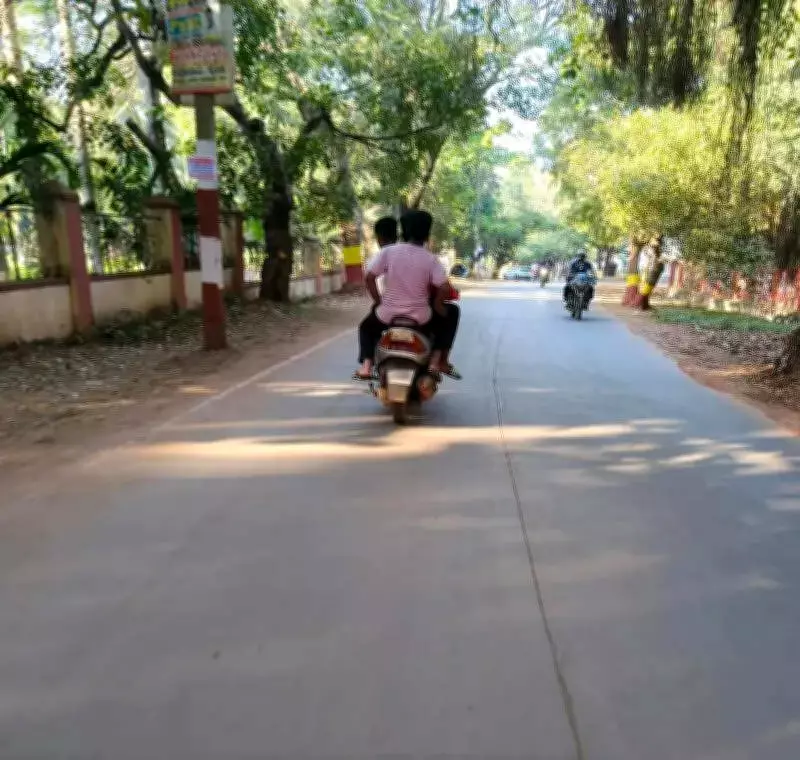
Persistent Traffic Violations by Minors Alarm Hubballi-Dharwad Authorities
Cases involving underage individuals operating vehicles continue to surge across the twin cities of Hubballi and Dharwad, despite a recent tragic incident that claimed the life of a teenager. Traffic police officials have intensified their appeals to parents, while simultaneously acknowledging significant challenges in enforcing regulations effectively.
Recent Tragedy Highlights Parental Negligence Concerns
The issue gained renewed public attention following the death of 15-year-old Manish Sangalad, who perished while filming a social media reel. This incident sparked widespread panic and sympathy across communities, with numerous online commentators pointing fingers at parental negligence as a primary contributing factor. However, both authorities and local residents confirm that the situation on the ground remains largely unchanged, with regular reports of traffic violations involving minors in prominent areas including Vidyanagar, Gokul Road, Gadag Road, and Keshwapur.
Common Violations and Enforcement Difficulties
Observations reveal that riding without helmets, triple riding with multiple passengers, and speeding on one-way roads occur frequently during daylight hours. A traffic police officer stationed at the Arts College junction explained the complexities of enforcement. "Many of these children come from either influential families or socially backward backgrounds. In both scenarios, parents often exercise minimal control over their offspring. When we attempt to stop them, we frequently encounter rude behavior. While we typically impose fines, some manage to escape when our attention shifts to managing overall traffic flow," the officer stated.

Official data from Hubballi-Dharwad traffic police sources indicates that 103 cases involving minors were registered between January 2025 and March 31, 2026, underscoring the persistent nature of the problem.
Community Perspectives and Proposed Solutions
Social activist Harshavardhan Sheelavant from Dharwad emphasized that this issue transcends gender boundaries. "Both boys and girls ride motorcycles with two pillion riders to attend morning tuition classes in neighborhoods such as Malamaddi, Narayanapur, Kalyan Nagar, and Srinagar. They operate vehicles fearlessly without protective helmets. To reduce fuel expenses, they often share bikes on a rotational basis. In certain instances, parents themselves encourage their children to use motorcycles," he revealed.
Sheelavant also highlighted that insufficient patrolling during early morning and late night hours has exacerbated the situation. Recalling a successful past initiative in Dharwad, he mentioned that a private college had previously prohibited entry to students riding bikes without helmets. "College administrations should revive and rigorously enforce such measures to prioritize student safety," he recommended.
Parent Vinayak Kathare suggested that police should actively involve educational institutions and tuition centers in addressing this menace. "Traffic police must organize meetings with tuition teachers, school administrators, and college managements to prevent these dangerous practices. Regrettably, enforcement often appears limited to collecting fines or yielding to political pressures," he alleged.
Official Response and Statewide Statistics
In response to mounting concerns, Deputy Commissioner of Police (Crime and Traffic) Ravi Sheesha CR noted that some parents perceive vehicle use by minors as a status symbol. "We are conducting extensive awareness campaigns and implementing strict actions against negligent parents. In severe cases, parents have even faced imprisonment," he affirmed.
Statewide data reveals alarming trends, with police department sources reporting that 27 individuals have lost their lives in road accidents involving minors across Karnataka over the past three years. More than 1,800 cases have been registered against parents, resulting in fines totaling approximately Rs 1.7 crore. Major urban centers including Bengaluru, Mysuru, and several southern Karnataka districts account for a substantial portion of these incidents, indicating a broader regional challenge that requires coordinated intervention.