MP High Court Confirms Life Sentences in 2013 Foreign Tourist Gang Rape Case
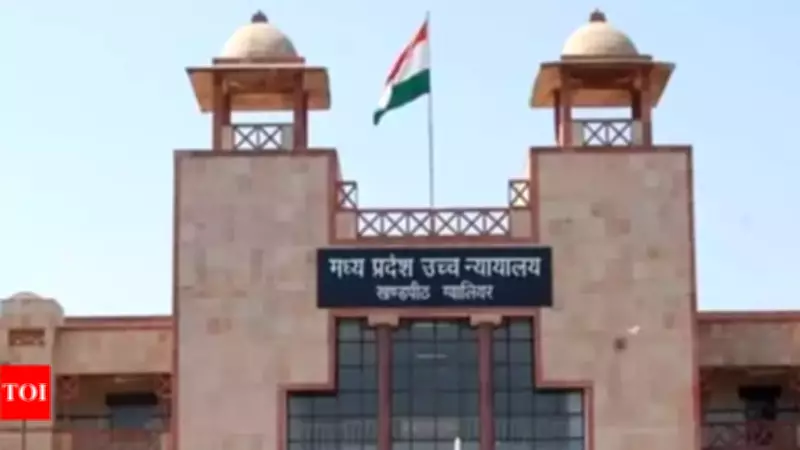
The Gwalior bench of the Madhya Pradesh High Court has firmly upheld the life imprisonment sentences awarded to six men convicted in the harrowing 2013 gang rape and dacoity case involving two foreign nationals in Datia district. In a decisive ruling, the court observed that the prosecution had successfully proven its case "beyond reasonable doubt" through a combination of consistent eyewitness testimony, compelling medical evidence, and conclusive DNA findings.
Court Dismisses Appeals, Upholds Original Verdict
A division bench comprising Justice Anand Pathak and Justice Pushpendra Yadav dismissed Criminal Appeal Nos. 832/2013 and 833/2013, which were filed by the convicts challenging the July 20, 2013 verdict of the Special Judge (Dacoity) in Datia. The court's judgment reinforces the severe penalties imposed for the brutal crimes committed against the foreign couple.
Details of the 2013 Incident
According to prosecution records, the traumatic incident occurred on March 15, 2013, when the foreign nationals, who were touring India on bicycles, had camped in a forested area near village Jharia in Datia district. Around 8 pm, five to seven men allegedly approached their tent, demanded money, and violently assaulted the couple.
The High Court noted in its judgment that while some of the accused restrained the husband, four of them proceeded to rape the woman in turns. The assailants also looted valuable items including a laptop, battery, earphones, cellphone, headlamp, and cash before fleeing the scene.
Prompt Police Response and FIR Registration
The couple later managed to reach the Datia-Seondha highway where, with assistance from passersby, they approached the Civil Line police station. The First Information Report (FIR) was registered promptly with the help of a translator—a factor the court emphasized as ruling out any possibility of deliberation or false implication.
"Promptness in lodging the FIR shows there was no time for manipulation and indicates that the allegation was not an afterthought," the bench observed in its judgment.
Reliance on Survivor Testimony and Medical Evidence
The court placed significant reliance on the testimony of the survivor and her husband, noting that her account of the sequence of events remained consistent and unshaken during rigorous cross-examination. While the defense argued that the survivor had stated she could not clearly see the faces of the accused due to darkness, the court rejected this contention.
The survivor was medically examined by a team of doctors at Gwalior. The court referred to the testimony of the examining doctor, who stated that injuries found on the survivor were consistent with forcible penetration and could not have been caused by cycling or accidental fall, as suggested by the defense.
Conclusive DNA Evidence and Forensic Findings
DNA profiling conducted at the Forensic Science Laboratory in Sagar matched biological samples of five accused—Ramprok, Vishnu, Bhoota alias Ghanshyam, Brijesh alias Gaja, and Nitin—with samples collected from the survivor. The bench described the DNA evidence as "implicative and corroborative" of the prosecution's case.
Although the DNA of Rishi alias Baba did not match, the court held that recovery of stolen property from his possession, along with identification by the victims, established his role in the crime. "In gangrape, proof of completed act of rape by each accused is not required," the court reiterated, citing Supreme Court precedents.
Recovery of Stolen Property and Firearm
The High Court also upheld findings relating to seizure of stolen property and a firearm. A laptop and cellphone were recovered at the instance of the accused, and fingerprint examination revealed matching prints of Ramprok, Brijesh, and Bhoota on the looted articles.
In Ramprok's case, a .315 bore gun and live cartridge were recovered based on his disclosure statement. The court affirmed his conviction under Sections 25(1)(1B)(a) and 27 of the Arms Act, observing that the weapon was used during the robbery.
The bench further noted that voter identity cards of two accused were seized from the spot and that the chain of custody of forensic samples remained intact during cross-examination.
Court Rejects Defense Arguments
The defense had argued that there were contradictions in witness statements, procedural lapses in obtaining fingerprint samples, and that the accused belonged to poor families and had already spent nearly 13 years in custody. They sought either acquittal or a more lenient view.
Rejecting these submissions, the High Court observed that police testimony cannot be discarded merely because it comes from official witnesses if found reliable. The court added that the accused had failed to explain the incriminating evidence against them in their statements under Section 313 of the Criminal Procedure Code.
Court's Strong Observations on the Nature of the Crime
Describing rape as "an attack not only on the body but also on the spirit and dignity of a woman," the bench said the offence was "all the more heinous" as it was committed against a woman tourist who had come to explore the cultural and historical heritage of the country.
"In the considered opinion of this court, the prosecution has proved the commission of the offence of rape, dacoity and offences under the Arms Act beyond reasonable doubt. The appellants shall have to suffer life imprisonment," the judgment stated unequivocally.
Final Disposition and Compliance Directions
With these comprehensive observations, the High Court dismissed both appeals and directed that the convicts, who have been in judicial custody since March 17, 2013, shall continue to serve the remaining part of their life sentences. Copies of the judgment have been sent to the trial court and jail authorities for necessary compliance, ensuring the verdict is implemented without delay.