

Mumbai Court Disposes of Obsolete Evidence from Decades-Old Cases
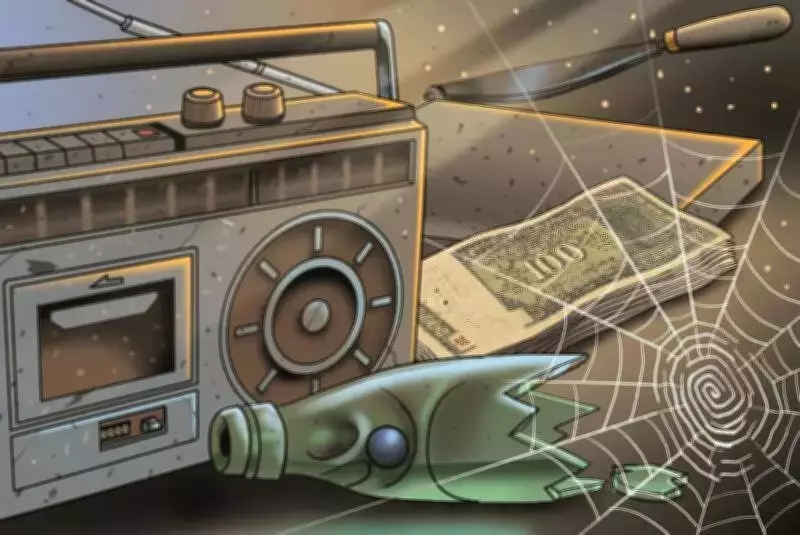
In a significant move, the Mumbai sessions court has begun disposing of material evidence from criminal cases dating back to the 1980s and 1990s, most of which ended in acquittal. This includes items like four-decade-old tape recorders, obsolete currency notes, and physical tools such as glass slides, blocks, and paper-cutting machines once allegedly used for counterfeiting money.
Acquittals in 40-Year-Old Trials
Additional Sessions Judge Satyanarayan R Navander recently cleared nearly 20 men across four trials that spanned over 40 years. These cases illustrate Mumbai's transition from an analog era to today's digital age and demonstrate how extreme delays eroded the prosecution's ability to prove guilt beyond reasonable doubt.
The evidence involved in these cases belonged to a bygone era. For instance, counterfeit Rs 100 notes, a high-value denomination at the time, were allegedly produced using glass slides, blocks, and paper-cutting tools, long before the advent of scanners and digital printers. Other cases reflected the crimes of their time, such as the use of broken soda-water bottles as weapons before illegal firearms became widespread.

Witness Disappearance and Legal Challenges
A common factor in these case collapses was the disappearance of witnesses. Key witnesses and even accused persons died, moved away, or lost memory of events, making it impossible to establish proof. In one counterfeit currency case, the trial lasted 40 years and 11 days, starting with a single Rs 100 note passed at a South Mumbai fruit stall in 1985.
Much of the delay was attributed to accused individuals remaining absconding for years. By the time judgments were delivered in 2026, some original accused had died, and others had already been acquitted.
Impact of Bharatiya Nagarik Suraksha Sanhita
A notable aspect of these acquittals is that several trials proceeded under the Bharatiya Nagarik Suraksha Sanhita (BNSS), which allows courts to continue proceedings in the absence of long-absconding accused. However, while this law enabled trials to move forward, both human and material evidence had not survived the passage of time. In each case, the court found nothing incriminating remained on record.
Case Studies Highlighting Systemic Issues
In a 1985 robbery in Bhandup, the court acquitted the remaining accused in March 2026 after nearly 40 years of proceedings. Armed with broken soda-water bottles, a group stormed Sushila Masala Stores and Dada General Stores, robbing Rs 300 and snatching gold chains valued at Rs 5,500 at the time. Two accused had been acquitted earlier, while two others remained untraceable. When witnesses were called to identify attackers, one stated, "I haven't seen these men before," leading to the case's collapse.
In a 1992 Colaba case involving the theft of a car tape recorder—an expensive device with black-market demand then—the prosecution's main witness, a watchman, deposed that although a theft occurred, he had not seen the thieves. This lack of eyewitness testimony, crucial in the pre-CCTV era, proved fatal to the case.
Forensic and Procedural Shortcomings
The counterfeit currency case exposed weaknesses in evidence handling. Police had seized printing blocks, glass slides, and paper-cutting machines, but the investigating officer never sent the seized Rs 100 notes to a government mint or forensic laboratory for expert examination. Without this, the court ruled there was no legal basis to declare the notes fake, noting that a layperson's suspicion could not substitute for forensic evidence. After 40 years, the equipment was ordered destroyed as worthless.
Procedural lapses also played a role. In a 1990 dacoity and murder conspiracy case, six men were acquitted after the victim admitted police had shown him suspects beforehand, rendering identification unreliable. With no digital or DNA evidence, the case depended on a test identification parade that was compromised.

Conclusion and Disposal Orders
The court has ordered the disposal of remaining material evidence, including obsolete items, as these cases highlight systemic challenges in the justice system, such as witness attrition and evidence degradation over time. This cleanup marks the end of an era for Mumbai's legal archives, shedding light on the difficulties of prosecuting crimes from a pre-digital age.





