Muslim Community to Contest ASI Report on Bhojshala-Kamal Maula Mosque Complex in Court
In Dhar, the Muslim community has strongly criticized the Archaeological Survey of India (ASI) report on the Bhojshala-Kamal Maula Mosque Complex, labeling it as "misdirected." Community leaders announced on Tuesday that they will challenge the report in court, arguing that the Hindu temple remains discovered at the site are not from a temple but from the rubble of Raja Bhoj's palace, which was destroyed centuries ago.
Legal Challenge Set for March 16 Hearing
The community plans to contest the ASI report at the Indore bench of the Madhya Pradesh High Court on March 16. This hearing is scheduled to address objections, opinions, suggestions, and recommendations regarding the ASI survey report, which was submitted to the court in 2024 and recently made public. The report states that the Kamal Maula Mosque in the Bhojshala complex was constructed using parts of ancient temples, noting that the existing structure was built "without much attention to symmetry, design, or uniformity."
According to the ASI report, based on scientific investigations, archaeological excavations, and analysis of architectural remains, sculptures, and inscriptions, it concludes that the mosque was made from earlier temple parts. However, Muslim leaders dispute these findings, pointing to historical records.

Rejection of ASI Findings by Community Leaders
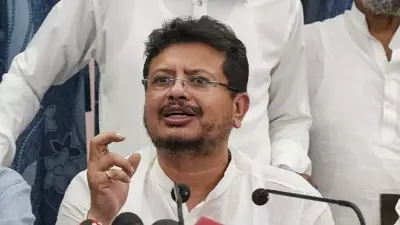
Abdul Samad, chairman of the Maulana Kamaluddin Welfare Society and the Muslim sadar (head) of Dhar, who is also a petitioner in the case, firmly rejected the ASI report. "The ASI report is a misdirection," he stated. Samad highlighted that a British-era ASI survey from 1903 had declared the site as the Kamal Maula Mosque and recorded it as a protected monument. He alleged that the recent survey was pre-planned, with objections raised since 2003, and that structures were brought to the complex with ulterior motives.
Samad emphasized the historical significance of the mosque, claiming it was built by Kamal Maulana, a Khalifa of Nizamuddin Auliya, who arrived in Dhar in 1295 to spread Islam. He said the erstwhile ruler of Malwa, Mahmud Khilji, provided the land, and due to difficulties in transporting heavy construction materials, builders used remains from Raja Bhoj's palace. "Since Raja Bhoj was a Hindu king, the structures found at the complex will certainly have Hindu structures," he explained, adding that the palace was destroyed by the Chalukya-Solanki dynasty from Gujarat, with some parts taken away and others left behind.
Future Steps and Community Resolve
Samad plans to present these arguments before the court at the next hearing, asserting that "It was a mosque, it is a mosque; namaz will continue to be offered there." The community remains determined to defend the site's status as a mosque, relying on historical evidence and previous ASI declarations to support their case. This dispute highlights ongoing tensions over archaeological interpretations and religious heritage in the region.