Nagpur High Court Takes Serious Note of Rainwater Inflow into Homes
The Nagpur bench of the Bombay High Court has issued a significant directive to municipal authorities, expressing serious concern over the increasing incidents of rainwater entering residential houses across the city. The court has ordered the Nagpur Municipal Corporation (NMC) and other concerned authorities to submit a comprehensive, time-bound action plan by March 9 to address this pressing issue.
Root Cause: Road Concretisation Raising Street Levels
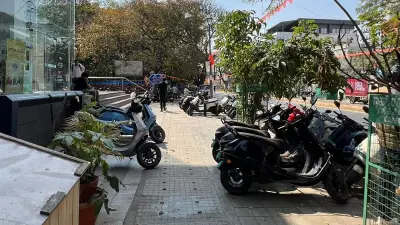
During the hearing, the court made a crucial observation that has highlighted a fundamental urban planning problem. The bench noted that large-scale cement concretisation of roads throughout Nagpur
This elevation of road surfaces has created a dangerous gradient where rainwater now naturally flows toward adjoining properties instead of being properly channeled away. The court termed this situation as serious and demanded that authorities provide concrete measures planned to prevent recurrence of this problem.
Expanded Scope of Public Interest Litigation
The directions came during the hearing of a public interest litigation originally filed by Janmanch president Rajeev Jagtap, who was opposing the cement concretisation of roads in the city. The bench, comprising Justices Anil Pansare and Nivedita Mehta, significantly expanded the scope of this petition to include road-related issues across the entire Vidarbha region.
During the proceedings, arguments centered specifically on how rising road heights due to extensive concretisation work has led to the flooding of nearby residential properties. The court expressed clear displeasure with both the overall situation and the functioning of the civic body in addressing this critical infrastructure challenge.
Court Demands Specific Monsoon Preparedness Details
The bench specifically sought detailed responses regarding monsoon preparedness from the municipal authorities. While the municipal corporation informed the court orally that it has initiated the process of seeking technical advice from VNIT (Visvesvaraya National Institute of Technology), the judges were not satisfied with this general response.
The court has now directed the civic body and all other concerned authorities to file a comprehensive reply that details specific pre-monsoon measures being implemented to protect homes from rainwater inflow. This directive emphasizes the need for actionable plans rather than procedural announcements.
Implications for Urban Planning and Infrastructure
This case highlights a significant urban planning challenge facing many Indian cities undergoing rapid infrastructure development. The court's intervention underscores the importance of considering downstream effects of infrastructure projects, particularly how road construction and elevation changes impact surrounding residential areas.
The March 9 deadline for the action plan creates immediate pressure on authorities to develop practical solutions before the next monsoon season. The expanded scope to include the wider Vidarbha region suggests this may be a systemic issue requiring regional rather than just local solutions.
Residents affected by rainwater inflow will be watching closely as authorities respond to the court's directive with concrete measures to address this serious infrastructure problem that has been compromising their homes and safety during monsoon seasons.