Nagpur High Court Takes Serious Note of Missing 89,308 Compensatory Trees
The Nagpur Bench of the Bombay High Court has initiated proceedings on a Public Interest Litigation (PIL) that raises alarming concerns about the city's rapidly diminishing green cover. A division bench comprising Justices Anil Kilor and Raj Wakode issued notices on Tuesday to the Maharashtra government, the Nagpur Municipal Corporation (NMC), and the Tree Authority, directing them to file their replies within a strict timeframe of six weeks.
Staggering Number of Unplanted Trees Revealed
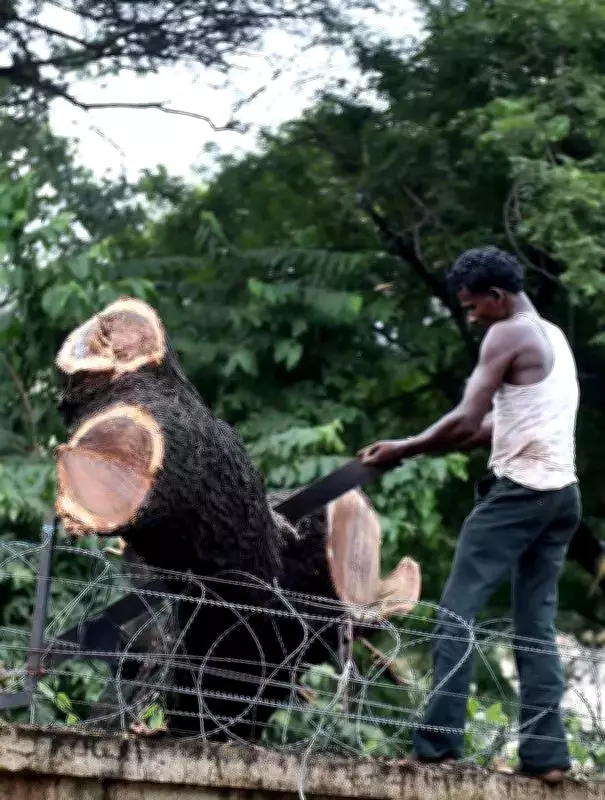
The PIL, filed by a non-governmental organization, presents a shocking claim: a staggering 89,308 compensatory trees, which were mandated to be planted after sanctioned tree felling across Nagpur, remain unplanted. This massive shortfall has been directly linked to a sharp and concerning decline in the city's overall green cover. According to the petition, large-scale permissions granted for tree cutting to facilitate various construction projects have resulted in Nagpur's green cover plummeting from a healthier 31% to a mere 21%.
Alleged Violations of the Maharashtra Tree Act
The litigation contends that the concerned authorities have failed to comply with the mandatory provisions of the Maharashtra (Urban Areas) Protection and Preservation of Trees Act, 1975. The petition, represented by counsel Krishna Agrawal, highlights specific sections of the Act where compliance appears lacking.

- Section 3 Violation: The plea alleges that the Tree Authority, which is required by law to include expert members, has not appointed any such experts. This is despite earlier directives from the High Court in a separate matter emphasizing this requirement.
- Section 7 Violation: The Act mandates a GIS-based tree census every five years. However, in Nagpur, the last comprehensive census was conducted back in 2011. Although a fresh exercise was initiated in 2023, it remains incomplete, leaving the city without accurate, up-to-date data on its tree population.
Relying on information obtained under the Right to Information (RTI) Act, the petitioners assert that while permissions for felling trees were duly granted, the corresponding compensatory plantation for 89,308 trees was never executed.
Questions Over Enforcement and Recent Permissions
The PIL raises serious questions about the enforcement mechanisms in place. It alleges a pattern of incomplete investigations and a lack of effective action against those guilty of illegal tree felling. "In many instances, investigations were not completed and effective action was not taken against the guilty," the petition states, pointing to systemic failures in upholding the law.
In a related and more recent claim, the petition sheds light on permissions granted between 2023 and 2025. It states that during this period, permission was granted to fell approximately 4,000 trees, which included nearly 350 heritage trees. The petition alleges that these permissions were issued without completing the due process required under Section 8 of the Act. This process includes considering alternative plans to minimize tree loss and adequately addressing objections raised by citizens.
Relief Sought from the High Court
The petitioners have asked the court to intervene and issue several crucial directives to rectify the situation:
- Order the lawful reconstitution of the Tree Authority with the inclusion of mandated expert members.
- Adopt a stricter, more transparent policy for granting permissions to fell trees.
- Ensure that the pending compensatory plantation for the 89,308 trees is completed on a priority basis.
- Direct the authorities to prepare and implement a time-bound action plan with the goal of achieving the recommended 33% green cover for the city.
The case brings to the forefront critical issues of urban environmental governance, compliance with protective legislation, and the urgent need to balance development with ecological preservation in one of Maharashtra's major cities.