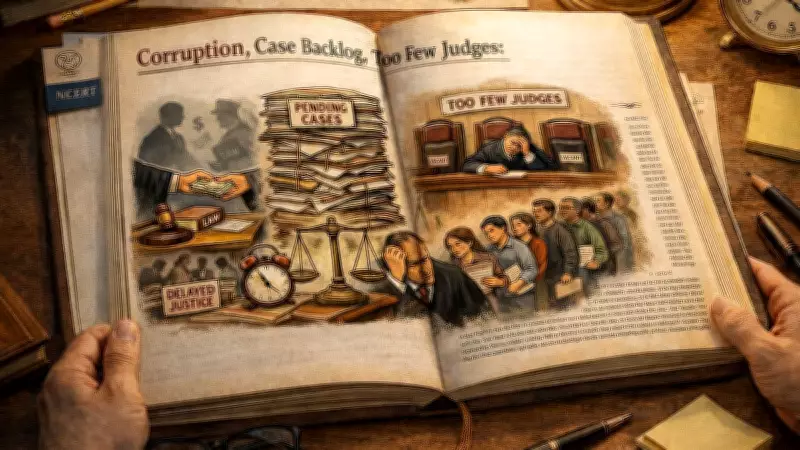
NCERT Textbook Revises Chapter to Detail Judicial System Challenges
The National Council of Educational Research and Training (NCERT) has updated a key chapter in its curriculum, moving beyond foundational concepts to critically examine the operational hurdles within India's judicial framework. The revised content, titled 'The Role of the Judiciary in Our Society', now includes a pointed analysis of systemic issues that impact the delivery of justice.
Beyond Court Hierarchy: A Focus on Systemic Issues
Previously, the chapter primarily outlined the hierarchical structure of courts, from district levels to the Supreme Court. The new edition expands significantly, dedicating sections to the practical challenges that hinder judicial efficiency and public trust. This shift represents an educational move towards fostering critical thinking about governance institutions among students.
Key Challenges Identified in the Revised Text
The NCERT book explicitly lists several critical problems facing the judiciary:
- Corruption: The text addresses concerns about unethical practices within the judicial system, highlighting how corruption can undermine fair trials and erode public confidence in legal institutions.
- Case Backlog: A major focus is on the enormous accumulation of pending cases across various courts. The chapter explains how this backlog leads to prolonged litigation, delaying justice for millions of citizens and overburdening the system.
- Shortage of Judges: The revised material points to a significant deficit in the number of judges relative to the population and caseload. It discusses how this shortage exacerbates the backlog and strains judicial resources, affecting the quality and speed of verdicts.
Educational Implications and Broader Context
By incorporating these real-world issues, the NCERT aims to provide students with a more nuanced understanding of the judiciary's role beyond theoretical structures. The chapter encourages learners to consider reforms and the importance of an accountable, efficient legal system in a democracy. This update aligns with broader educational goals of promoting civic awareness and critical engagement with public institutions.
The revision, dated February 24, 2026, marks a progressive step in curriculum development, reflecting contemporary discussions on judicial reform. It serves as an educational resource that not only informs but also prompts reflection on the intersection of law, society, and governance in India.