

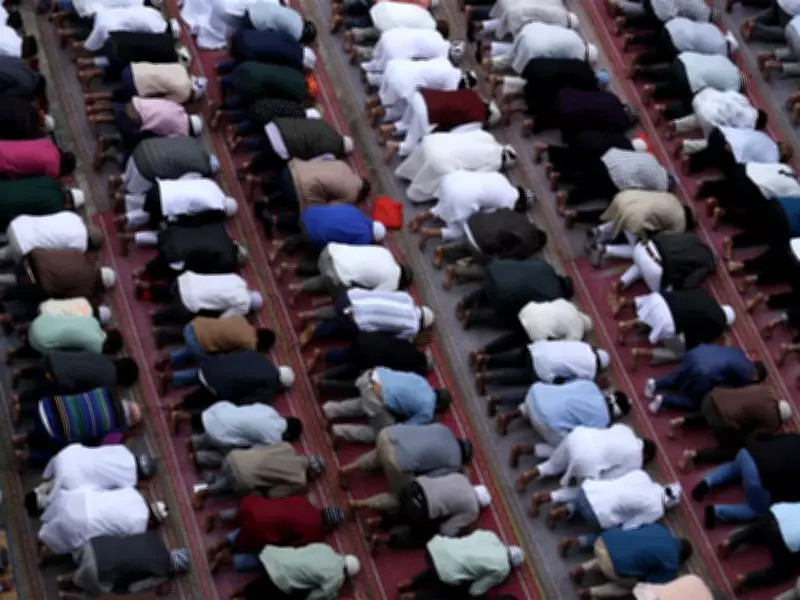
Hundreds Gather in Nepal to Celebrate Eid-Al-Fitr with Mass Namaz
In a vibrant display of faith and community spirit, hundreds of Muslims assembled in Nepal on Saturday morning to observe Eid-Al-Fitr, the festival marking the conclusion of the holy month of Ramadan. The gathering took place at the historic Jame Mosque in Kathmandu, where attendees participated in special prayers, known as Namaz, to celebrate the end of a month-long fast.
Festive Prayers and Traditions
After offering the mass Namaz, the celebrants exchanged heartfelt blessings and embraced one another, reinforcing bonds of friendship and kinship. Rihan, one of the participants, shared with ANI, "We underwent thirty days long Roza, on the day of Eid, we gather for the mass Namaz." He added that following the prayers, it is customary to meet with loved ones, share hugs, and enjoy sweet delicacies prepared at home.
The festival, often referred to as 'Mithi Eid' or Sweet Eid, emphasizes the consumption of traditional sweets. Sohail, another attendee, explained, "After the Namaz of Eid, we exchange greetings with each other. After this, we have various delicacies and sweets prepared at home. Today, it's 'Mithi Eid' that's why sweets are preferred more." This practice of sharing meals helps preserve collective joy and fosters a sense of unity within the community.

Spiritual and Social Significance
Eid-Al-Fitr, which translates from Arabic as "the feast of the breaking of the fast," is not merely a religious observance but also a symbol of social harmony and cultural solidarity. The festival teaches valuable lessons in restraint, patience, and self-control, cultivated during Ramadan through fasting and devotional prayers. It strengthens the spirit of coexistence by organizing collective prayers and Iftar gatherings.
Key traditions associated with Eid include:
- Wearing new clothes to signify renewal and purity.
- Exchanging greetings such as 'Chand Mubarak' or 'Eid Mubarak' upon sighting the Eid moon, promoting mutual harmony and brotherhood.
- Engaging in acts of charity and assistance, which foster compassion towards the less fortunate and support societal justice.
These customs highlight the festival's role in encouraging fraternity, reconciliation, and collectivism. As noted in the celebrations, religion inspires honesty, industriousness, and duty, providing people with patience and courage during challenging times.
Historical and Governmental Aspects
Eid-ul-Fitr has deep historical roots, traced back to 624 CE when it was marked by Prophet Mohammed following a significant victory. After a month of abstaining from food, drink, and other physical needs during daylight hours, Eid serves as a time of festivity and gratitude for the strength demonstrated throughout Ramadan.
In recognition of the occasion, the Nepalese government declared a public holiday for Saturday, as confirmed by the Home Ministry. This official acknowledgment underscores the festival's importance in promoting social cohesion and national unity.
Overall, Eid-Al-Fitr in Nepal exemplifies how religious festivals can motivate progress not only in faith but also on the path towards social justice, equality, and peaceful coexistence. The celebrations in Kathmandu reflect a broader commitment to embracing values that build a civilized and compassionate society.






