

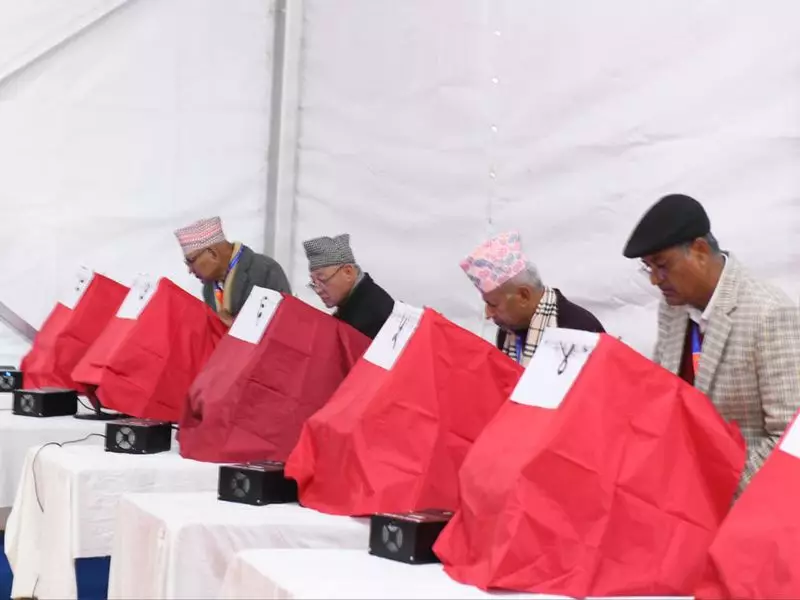
In a significant display of internal party democracy, Nepal's ruling Communist Party of Nepal (Unified Marxist–Leninist), commonly known as CPN-UML, has recorded an overwhelming 98 percent turnout in its ongoing general convention. The landmark event, pivotal for electing the party's top leadership for the next five years, saw delegates cast their votes on Sunday, with the counting process now scheduled to commence late on Monday morning.
High Stakes and Heavy Participation
The 10th General Convention of the CPN-UML, held at the Bhrikutimandap exhibition hall in Kathmandu, is a critical internal election. Over 2,200 delegates were eligible to vote for key positions including the party chairman, vice-chairmen, general secretary, and other central committee members. The near-total participation rate underscores the high stakes involved, as the outcome will shape the direction of one of Nepal's most influential political forces.
Incumbent chairman and former Prime Minister KP Sharma Oli is seeking re-election, facing a challenge from senior leader and former Deputy Prime Minister Madhav Kumar Nepal. The contest has drawn intense interest, as it could influence the stability of the current coalition government led by Prime Minister Pushpa Kamal Dahal 'Prachanda'.

Logistical Hurdles Cause Counting Delay
Despite the smooth voting process that concluded on Sunday evening, the counting of ballots has been delayed. Party officials confirmed that the tallying of votes for the powerful chairman's post and other positions will now begin late on Monday morning. The delay is attributed to the extensive logistical arrangements required to manage and verify ballots from such a large number of delegates participating in a secret ballot system.
The convention's central election committee, responsible for overseeing the electoral integrity, has been working through the night to prepare for the counting. The results are expected to trickle in throughout Monday, potentially extending into Tuesday, given the number of positions being contested.
Implications for Nepal's Political Landscape
The results of this internal election carry substantial weight beyond the party's headquarters. The CPN-UML is a major constituent of the ruling coalition, and any significant shift in its leadership could recalibrate national politics. A victory for KP Sharma Oli would likely signal continuity in the party's current ideological and strategic stance. Conversely, a win for Madhav Kumar Nepal might herald a shift towards a more conciliatory approach within the party and potentially in its dealings with coalition partners.
Political analysts in Kathmandu are closely watching the proceedings, noting that the 98 percent voter turnout reflects both the competitive nature of the race and the deep engagement of the party's rank and file. The outcome will not only determine the UML's internal power structure but also impact governance and policy-making in Nepal for the foreseeable future.
As Nepal awaits the results, the focus remains on the Bhrikutimandap exhibition hall, where the future leadership of a key political player is being decided through a robust and highly participatory democratic exercise.






