

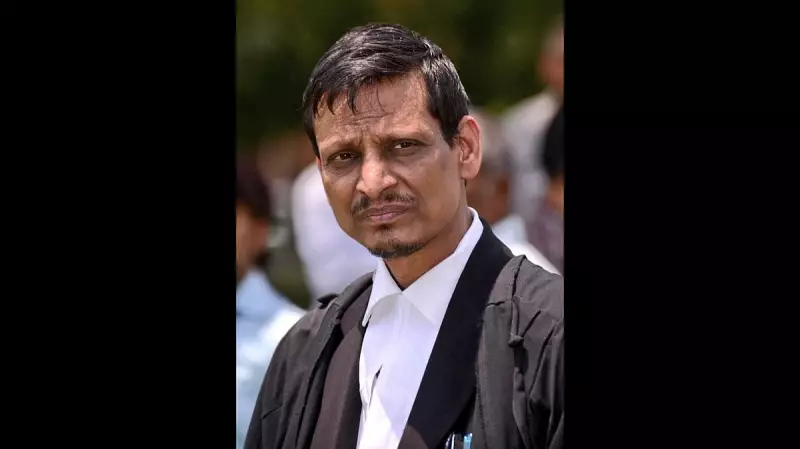
M.L. Sharma, the defense lawyer who represented the convicts in the horrific 2012 Nirbhaya gangrape and murder case, has died. He was 69 years old. Sharma passed away on Tuesday, May 28, 2024, in Delhi. His death marks the end of a controversial legal career that became inextricably linked to one of India's most shocking crimes.
A Career Defined by a Notorious Case
Manohar Lal Sharma, popularly known as M.L. Sharma, was a practicing advocate in the Supreme Court of India. However, he gained national and international notoriety for his role as the defense counsel for Mukesh Singh, Pawan Gupta, Vinay Sharma, and Akshay Thakur. These four men, along with a juvenile, were convicted for the brutal gangrape and murder of a 23-year-old physiotherapy intern in Delhi on December 16, 2012. The case, which sparked massive nationwide protests and led to sweeping legal reforms, came to be known as the Nirbhaya case.
Throughout the lengthy legal proceedings, Sharma's arguments and public statements often drew severe criticism and outrage. He was known for making controversial and victim-blaming remarks during media interactions, which frequently overshadowed the legal defense he was attempting to mount. His passing brings to a close a chapter associated with the defense side of a trial that shook the conscience of the nation.

Details of His Passing and Legal Legacy
According to reports, M.L. Sharma died on Tuesday. While the precise cause of death has not been widely detailed in initial reports, it is confirmed that he was 69 at the time of his passing. His death occurred in the city where the crime he defended took place and where the subsequent trial was held – Delhi.
Sharma's legal strategy in the Nirbhaya case involved challenging the prosecution's evidence and the circumstances of the arrests. The trial progressed from fast-track courts to the Delhi High Court and finally to the Supreme Court. Despite his efforts, the courts upheld the convictions and death sentences for his clients. The four adult convicts were eventually executed on March 20, 2020, at Tihar Jail.
Beyond the Nirbhaya case, Sharma had a long career in law. He took on various cases, but it was his association with this particular trial that cemented his public image. His passing is noted within legal circles, though it reignites memories of a dark period in India's recent history and the complex role defense lawyers play in the judicial system, even in the face of universally condemned crimes.
Reflections on Justice and Legal Representation
The death of M.L. Sharma inevitably leads to a reflection on the Nirbhaya case's enduring impact. The crime led to the formation of the Justice Verma Committee, which recommended stringent amendments to criminal laws related to sexual violence. This resulted in the Criminal Law (Amendment) Act, 2013, which expanded the definition of rape and introduced harsher penalties.
Sharma's role highlighted the ethical tightrope walked by defense attorneys. The Indian legal system guarantees every accused the right to a legal defense, a fundamental principle of justice. However, Sharma's approach, particularly his media comments, sparked debates about professional conduct and the boundaries of advocacy in cases involving heinous crimes and overwhelming public sentiment.
The execution of the four convicts in 2020 brought a sense of closure to many, though the memory of the crime remains a painful landmark. With the passing of their defense lawyer, another figure directly connected to the legal saga exits the public sphere. The case continues to be a reference point for discussions on women's safety, legal reforms, and the pace of justice in India.
M.L. Sharma is survived by his family. His death concludes the story of a lawyer whose name will forever be associated with one of the most pivotal and tragic cases in modern Indian jurisprudence.






