

Odisha's Remarkable Turnaround in the Fight Against Maoism
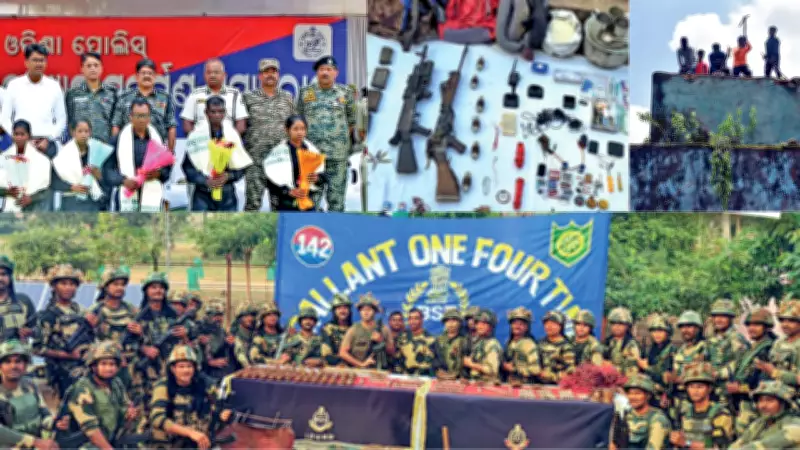
As India's ambitious March 31 deadline to eradicate Maoist influence approaches, Odisha stands as a testament to what determined governance and strategic policies can achieve. The state, once a hotbed of Naxalite activity, is now witnessing a steady stream of rebels laying down their arms and reintegrating into mainstream society.
From Fear to Freedom: A Personal Transformation
For 62-year-old Sanguru Madkami of Malkangiri, the memories of gunfire, landmine explosions, abductions, and relentless Maoist violence are deeply ingrained. Decades of fear shaped both his childhood and adulthood. "Nobody other than us can truly understand this change," Madkami reflects, as he and fellow villagers recently dismantled a rebel-built memorial in Kalimela. "We lived through the worst of Maoist terror, and today, the atmosphere of safety means everything." This symbolic act underscores the collapse of Maoist strongholds and the dawn of a new era for thousands.
The Statistical Evidence of Progress
Chief Minister Mohan Charan Majhi provided concrete evidence of this transformation during the budget discussion for the home department in the assembly on March 25. He revealed that Kandhamal remains the only Naxal-affected district in Odisha, with merely 8 or 9 rebels still active. This marks a dramatic reduction from the peak years between 2004 and 2012, when at least 21 of the state's 30 districts were plagued by Left Wing Extremism (LWE) activities.

Remembering the Dark Days of Violence
The state endured numerous brutal attacks during its most violent period:
- On February 15, 2008, Maoists launched coordinated assaults on police establishments in Nayagarh district, killing 14 people, including 13 security personnel, just 80 km from Bhubaneswar.
- July 16, 2008, saw 17 Odisha police personnel die in a landmine blast in Malkangiri's MV-126 area.
- June 29, 2008, witnessed the tragic loss of 38 security personnel, including 36 elite Greyhounds from Andhra Pradesh, in the Chitrakonda reservoir of Malkangiri.
- The murder of Swami Laxamanananda Saraswati in Kandhamal on August 23, 2008, triggered severe ethno-religious conflicts.
- April 12, 2009, brought another deadly attack at Nalco's bauxite mine in Koraput, claiming 11 CISF personnel.
High-profile abductions further destabilized the region, including those of former Malkangiri district collector R Vineel Krishna in 2011, two Italian tourists in 2012, and former BJD MLA Jhina Hikaka in 2012.
The Strategic Turnaround: Policies and Operations
The arrest of top Odia cadre Sabyasachi Panda in July 2014 dealt a significant blow to Naxal operations. Odisha's revised surrender and rehabilitation policy, notified on November 27, 2025, has been instrumental in this shift. Offering a reward payout 10% higher than Chhattisgarh's, the state has created a more attractive package for rebels seeking to surrender.
Momentum Builds with Key Successes
2025 proved pivotal for Odisha's anti-Maoist campaign:
- On September 11, central committee member and Odisha secretary (in-charge) Modem Balakrishna was killed in Chhattisgarh.
- A joint operation with Chhattisgarh and CRPF on January 21 eliminated top commander Chalapathi and 13 cadres.
- May 21 saw the death of CPI (Maoist) general secretary Basavaraju, along with 27 others, in Chhattisgarh.
The Final Assault and Organizational Erosion
ADG (anti-Naxal operations) Sanjeeb Panda highlighted recent achievements: "Odisha police made the most significant achievement by gunning down central committee member Ganesh Uike and five others during a two-day operation in Kandhamal on December 24–25 last year." The surrender of top Maoist leaders like Nikhil and Sukru has further weakened the rebel infrastructure, signaling a near-complete erosion of their organizational strength in the state.
As the March 31 deadline looms, Odisha's journey from violence to stability offers a blueprint for other affected regions. The combination of robust security measures, lucrative rehabilitation policies, and community engagement has brought peace to areas once dominated by fear, marking a historic chapter in India's fight against Maoism.






