Orissa High Court Mandates Disclosure of Jagannath Temple Keys Report
The Orissa High Court has issued a directive compelling the state government to present the Justice Raghubir Dash Commission report concerning the missing or misplaced keys of the Ratna Bhandar at Puri's Jagannath Temple. This report must be tabled before the assembly during the upcoming budget session, which is scheduled to commence on February 17.
Court Sets Deadline for Temple Inventory Completion
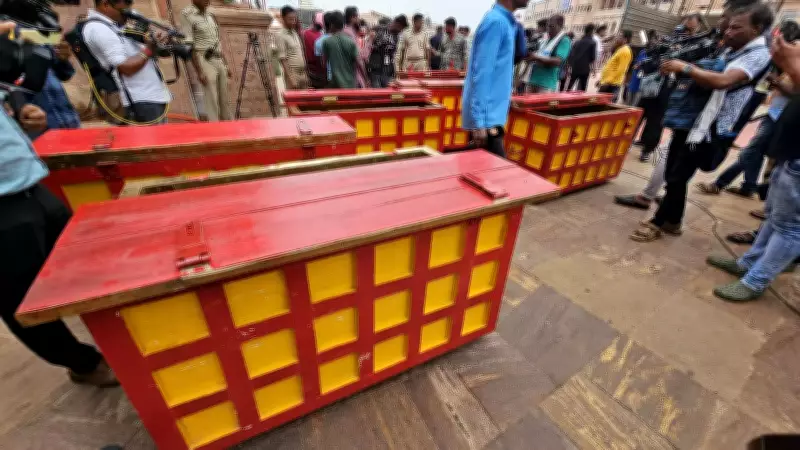
In a significant ruling, the court has also ordered that a comprehensive inventory of the ornaments and jewellery housed within the Ratna Bhandar be finalized within a strict three-month timeframe. This inventory process must include a meticulous tallying exercise to cross-reference the items with the benchmark list established in 1978.
The bench, comprising Chief Justice Harish Tandon and Justice M S Raman, emphasized that "no complacency can be shown by the state government" in addressing these critical matters. The court has scheduled a follow-up hearing in three months to review progress and receive a further report on compliance.

Background of the Commission and Legal Proceedings
The Justice Raghubir Dash Commission was originally constituted on June 6, 2018, with the specific mandate to investigate the circumstances surrounding the disappearance of the original keys to the Ratna Bhandar. The commission submitted its findings to the government on November 29, 2018, but the report has remained undisclosed to the public and legislative bodies until now.
This directive arose from a Public Interest Litigation (PIL) filed by Puri resident Dillip Kumar Baral. During the proceedings, the court underscored that the state "cannot sit idle" following the completion of repair and conservation works on the Ratna Bhandar by the Archaeological Survey of India. These repairs included the reinstatement of valuables under the supervision of a newly formed inventory committee.
State's Response and Inventory Challenges
Advocate-general Pitambar Acharya, representing the state government, assured the court that the commission's report would be presented before the cabinet and subsequently before the assembly for a conscious decision. Regarding the inventory, Acharya acknowledged the complexity of the task, stating that an extensive exercise is required to scrutinize the jewellery and valuables in alignment with the 1978 inventory records.
He noted, "Such extensive exercise requires some time," highlighting the challenges involved in ensuring accuracy and completeness. The court, taking note of these submissions, directed that the inventory must be completed within three months to verify its consistency with the 1978 list.
Approval Process for Standard Operating Procedures
A draft Standard Operating Procedure (SOP) for conducting a fresh inventory, based on the 1978 records, has already received approval from temple authorities. This SOP is currently awaiting final endorsement from the state government before implementation can proceed.
Advocate Anup Kumar Mohapatra represented the petitioner in the case, advocating for transparency and accountability in the handling of the temple's sacred assets. The court's order, originally issued on January 27, was officially uploaded and made public on Thursday, marking a pivotal step towards resolving long-standing concerns about the temple's security and management.