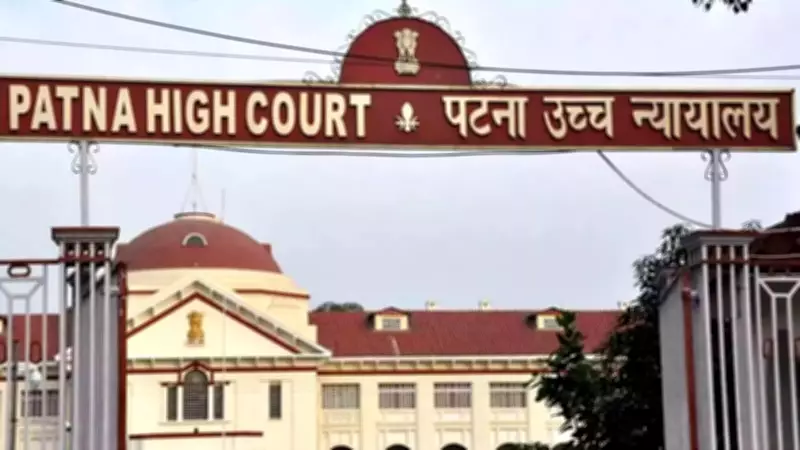
Patna High Court Mandates Strict Enforcement of Noise Pollution Regulations
The Patna High Court issued a significant directive on Friday, compelling the state police to rigorously implement established rules designed to control noise pollution. This comprehensive order includes a complete prohibition on the use of loudspeakers, amplifiers, and firecrackers during the nighttime hours from 10 PM to 6 AM.
Court Hearing and Police Directives
A single bench presided over by Justice Rajiv Roy delivered this ruling while adjudicating a petition filed by an individual named Surendra Prasad. The court explicitly instructed the Patna Senior Superintendent of Police (SSP) to guarantee that all Station House Officers (SHOs) within the district adhere strictly to the Noise Pollution (Regulation and Control) Rules established in the year 2000.
These regulations not only impose time restrictions but also mandate strict decibel limits for all sound-emitting systems, including vehicle horns. Sound levels exceeding these prescribed limits are officially classified as harmful and are recognized for causing significant discomfort and potential damage to the normal human eardrum.
Integration with Emergency Response Systems
During the court proceedings, state government counsel Prashant Pratap provided crucial updates. He informed the bench that noise pollution monitoring has now been successfully integrated with the Emergency Response Support System (ERSS).
This integration empowers citizens to utilize the 112 emergency dialing service to formally lodge complaints related to excessive noise. Pratap further elaborated, stating, "Approximately 1,883 vehicles have been made operational on a 24/7 basis, and immediate action will be initiated to control any violations of noise regulations, with particular emphasis on the prohibited night hours."
Justice Roy commended the efforts of the state's Director General of Police (DGP) in facilitating the 112 dialing service, observing that it has emerged as a primary and effective tool for the public to register grievances against noise pollution specifically within the Patna district.
Concerns Over Rampant Pollution and Air Quality Issues
Senior advocate Ajay, who has been appointed as amicus curiae (friend of the court) in this matter, presented additional concerns. He pointed out that considerably more effort is urgently required to tackle the rampant and pervasive noise pollution in several specific areas. These identified zones fall under the jurisdiction of the Kadamkuan, Pirbhore, Rupaspur, Budha Colony, and Gandhi Maidan police stations.
In a related development, Senior advocate Shivendra Kishore, representing the Bihar State Pollution Control Board (BSPCB), brought the court's attention to a separate environmental hazard: the "dust menace." He attributed this issue to large-scale construction projects, with a particular focus on the Danapur area.
Kishore submitted that the board has already issued formal notices to several violators for failing to adequately manage and control both air and dust pollution within the state capital. In response to this submission, the court directed the BSPCB to prepare and file a detailed report. This report must outline the specific, concrete steps that have been taken to mitigate and reduce air pollution levels in Patna.
The court has scheduled the next hearing for this multifaceted environmental case on February 13, where further progress and compliance will be reviewed.