Former Chief Justice Ramana Endorses Surya Kant's Suo Motu Action on NCERT Textbook
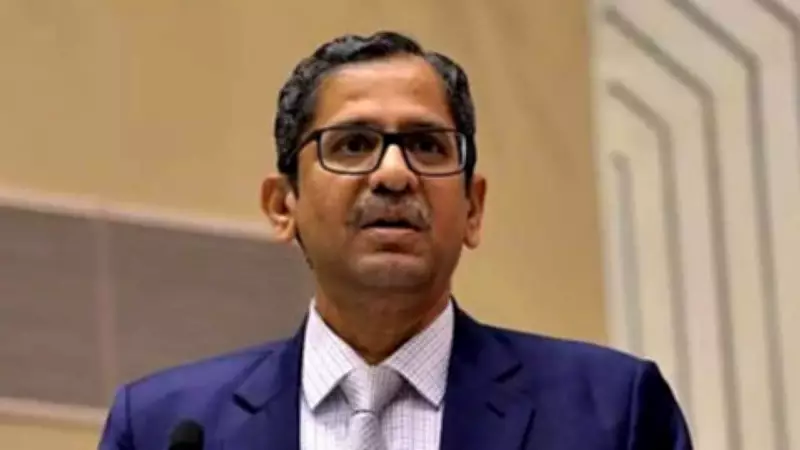
In a significant development, former Chief Justice of India N V Ramana has expressed strong support for the suo motu action taken by current CJI Surya Kant regarding a controversial reference to judicial corruption in an NCERT textbook. The controversy centers on a Class VIII textbook that mentions corruption within the judiciary, which CJI Surya Kant has termed a "very calculated and deep-rooted conspiracy to malign judiciary."
Historical Context of Judicial Corruption Discussions
The debate about corruption in the judiciary is not new. In December 2002, former CJI Justice Sam Piroj Bharucha acknowledged the issue publicly during a speech in Kollam, Kerala. He stated that "more than 80% of judges in this country, across the board, are honest and incorruptible," while noting that it was the "smaller percentage that brings the entire judiciary into disrepute." Justice Bharucha emphasized the need to investigate and dismiss corrupt judges to maintain judicial integrity.
More recently, in June 2025, CJI B R Gavai addressed the impact of corruption on public confidence in the judiciary. Speaking at the UK Supreme Court on 'Maintaining Judicial Legitimacy and Public Confidence,' Justice Gavai admitted that instances of corruption have surfaced within the judiciary, negatively affecting public faith in the system. This followed the seizure of a large amount of cash from the official residence of Justice Yashwant Varma.
Former CJI Ramana's Strong Critique
Former CJI N V Ramana welcomed CJI Surya Kant's suo motu cognisance of the NCERT textbook matter. He questioned the basis for including such content in educational materials, asking, "Should students with impressionable minds be taught about something based on corridor gossip? What is the basis on which NCERT is attempting to defame the institution and demoralise judges?"
When reminded of ex-CJI Bharucha's comments on corruption, Justice Ramana dismissed them as insufficient justification. He argued, "A loose comment by a former CJI cannot become the basis to teach it as gospel truth to students. It is not proper. CJI Surya Kant has done the right thing by taking suo motu cognisance of the matter."
Past Judicial Observations and Political Remarks
The Supreme Court has previously commented on issues within the judiciary. In November 2010, in the case of 'Raja Khan vs UP Sunni Central Waqf Board,' the SC noted that something was "rotten" in the Allahabad High Court. The court expressed regret over numerous complaints against certain judges, highlighting instances where judges' relatives practicing in the same court amassed significant wealth rapidly.
In August 2023, then Rajasthan Chief Minister Ashok Gehlot stirred controversy by alleging "rampant corruption in the judiciary." Following a PIL in the Rajasthan High Court seeking action against him, Gehlot tendered an unconditional apology while reaffirming his "full faith in the judiciary."
Implications for Judicial Integrity and Education
This controversy raises important questions about how judicial issues are presented in educational curricula. While acknowledging past discussions on corruption, the judiciary's leadership appears united in opposing what they see as an unfair portrayal in textbooks. The suo motu action by CJI Surya Kant, backed by former CJI Ramana, underscores the institution's sensitivity to its public image and the potential impact on young minds.
The debate continues to highlight the delicate balance between transparency about judicial challenges and maintaining public confidence in the legal system.