Long Island Architect Rex Heuermann Admits Guilt in Eight Chilling Murders Spanning Decades
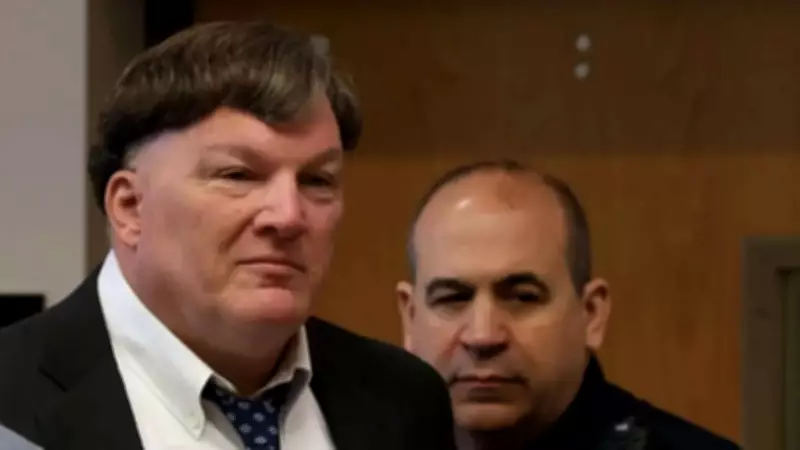
In a dramatic courtroom development, Rex Heuermann, a 62-year-old architect from Long Island, confessed on Wednesday to the brutal strangulation of eight women over a period of nearly three decades. This guilty plea brings a grim conclusion to one of New York's most infamous and long-unsolved serial murder cases, which has haunted families and law enforcement for years.
Heuermann, who once maintained a quiet professional facade, now faces severe legal consequences for a series of killings that devastated numerous families and sent shockwaves through local communities. He formally pleaded guilty to seven murders and additionally confessed to the killing of an eighth victim, Karen Vergata, whose remains were discovered years apart. Since his arrest in Manhattan in July 2023, Heuermann has been held in custody, with sentencing scheduled for June 17.
The 'Gilgo Four' and a Disturbing Pattern of Crimes
Heuermann was initially charged in connection with the deaths of four young women, collectively known as the "Gilgo Four." These victims—Maureen Brainard-Barnes, Melissa Barthelemy, Megan Waterman, and Amber Lynn Costello—were all in their 20s, worked as escorts, and vanished between 2007 and 2010.

Their bodies were found in December 2010 along Gilgo Beach, each wrapped in burlap and buried in close proximity, revealing a horrifying and consistent pattern. Subsequent investigations expanded the scope, linking Heuermann to the murders of Jessica Taylor, Valerie Mack, Sandra Costilla, and Karen Vergata, with incidents dating back as far as 1993.
Advanced Investigation Techniques Uncover Key Evidence
The investigation gained significant momentum in 2022 when a multiagency task force employed cutting-edge forensic methods. Advanced DNA testing, detailed analysis of cell phone records, and scrutiny of internet activity were crucial in connecting Heuermann to the crimes.
- DNA evidence was recovered from a discarded pizza crust and a male hair found on the burlap used to wrap the victims.
- Cell tower data placed burner phone calls made to the victims in close proximity to Heuermann's home and office.
- A witness provided a critical link by identifying a distinctive green Chevrolet Avalanche, associated with Heuermann, that was seen with one of the victims.
Authorities revealed that Heuermann meticulously planned the murders, often committing them while his family was away. In court, he admitted not only to strangling the victims but also, in some instances, to dismembering their bodies.
Prosecutors further disclosed disturbing details: Heuermann used a victim's phone to harass their relatives after the murder, and documents were found outlining plans for future killings, indicating a high degree of premeditation.
Families React as Justice Approaches
The guilty plea has evoked a mix of relief and profound grief among the victims' families, many of whom have endured years of uncertainty and pain. Emotional scenes unfolded in the courtroom as Heuermann acknowledged his heinous crimes.
His estranged wife and daughter were present during the proceedings. Following the plea, his wife expressed condolences to the victims' families while requesting privacy during this challenging period.
The Gilgo Beach killings first captured major public attention in 2010 after the disappearance of Shannan Gilbert led to the discovery of multiple sets of human remains along Ocean Parkway. Although Gilbert's death was later deemed unrelated, the case exposed a prolonged history of targeted violence against women involved in sex work, highlighting systemic vulnerabilities and investigative challenges.