The ambitious Delhi-Mumbai Expressway, envisioned as a catalyst for commerce and connectivity, is facing an unexpected challenge in Gujarat. Authorities report that the partially operational corridor has become a preferred and "safe" route for smuggling liquor into the prohibition state, leading to massive seizures worth crores of rupees.
Expressway Turns into Smuggling Corridor
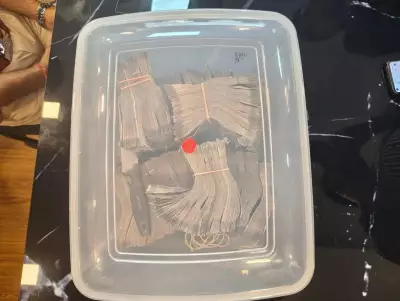
Data from the Dahod district police, which monitors the expressway's entry points into Gujarat, reveals a staggering trend. In just three months—from September 1 to November 30 this year—the police seized Indian Made Foreign Liquor (IMFL) worth a whopping Rs 10 crore. This contraband was ingeniously concealed in vehicles like oil tankers, liquid cement carriers, sealed container vans, and trucks carrying cattle feed.
Police Inspector Sanjay Gameti of the Dahod Local Crime Branch (LCB) stated that over 7,000 cartons of IMFL, comprising 1.8 lakh individual units, were intercepted during this period. The liquor, primarily sourced from Haryana and Punjab, used the now-operational Delhi-Madhya Pradesh stretch of the Bharatmala corridor to travel undetected before attempting to enter Gujarat.

Contrast with Regular Prohibition Enforcement
The scale of smuggling via the expressway becomes starkly clear when compared to regular prohibition enforcement in the district. Since January this year, the entire Dahod district had recorded liquor seizures worth approximately Rs 50 lakh across about 5,000 other prohibition cases. The Rs 10 crore seizure from the expressway in three months alone dwarfs this figure, highlighting the expressway's emergence as a major conduit for bootleggers.
Inspector Gameti explained the modus operandi: "Since the Bharatmala stretch from Delhi to Thandla in Jhabua district of Madhya Pradesh became operational, liquor smugglers have been using this route. Vehicles travel undetected up to Thandla and then proceed through Meghnagar in MP towards Gujarat, entering at Khangela in Dahod."
Challenges of an Unmanned Corridor
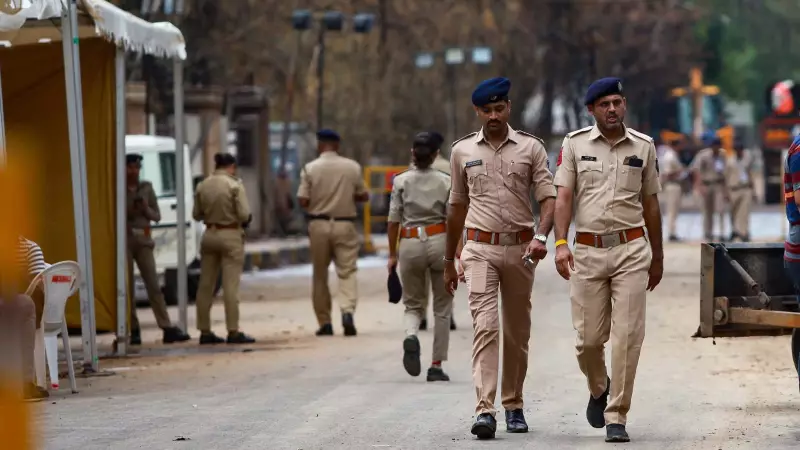
A key factor enabling this smuggling is the absence of interstate check-posts on the expressway itself, as per its design policy. An NHAI official clarified that law enforcement agencies like local police and excise departments can set up check-posts outside the expressway's Right of Way. However, the unmanned, high-speed corridor offers a faster and less monitored alternative to state highways, which have excise check-posts.
"On the Bharatmala corridor, there are no interstate check-posts so far. It is also a faster route. Although the stretch from Thandla to Gujarat is yet to be completed, the operational patch has become an escape route for bootleggers," Gameti added. All 16 interceptions involved vehicles headed for destinations within Gujarat, not merely passing through.
A senior Gujarat Police officer emphasized coordinated interstate efforts to crack down on the cartels. "Smugglers certainly view the expressway as an easier path. There is a coordinated effort at the interstate level... Through interstate coordination, the state police also receive tip-offs on such vehicles," the officer said. The police have also recently busted an attempt to smuggle poppy straw worth Rs 14 lakh into the state via this route.
The 1,386-km expressway, a part of the Bharatmala Pariyojana, aims to slash travel time between Delhi and Mumbai to 12.5 hours. A 426 km stretch passes through Gujarat, the only state with strict prohibition on the route. With the expressway only partially open, its security challenges have come to the fore even before its full inauguration.