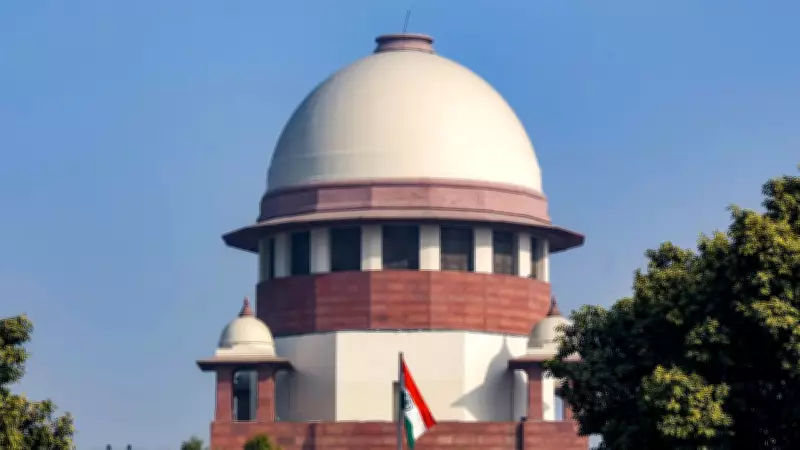
Sabarimala Temple Priest Argues Rituals Are Beyond Judicial Determination
In a significant development, the chief priest of the Sabarimala Ayyappa temple presented arguments before the Supreme Court on Friday, asserting that the rights and wrongs of idol worship modes are judicially indeterminable. This statement comes in the context of the temple's custom of barring menstruating women, which was struck down by the court in 2018.
Key Arguments Presented by Senior Advocate V Giri
Appearing for the 'thantri' (chief priest), senior advocate V Giri addressed a bench comprising Chief Justice Surya Kant and Justices B V Nagarathna, M M Sundresh, Ahsanuddin Amanulla, Aravind Kumar, A G Masih, P B Varale, R Mahadevan, and J Bagchi. Giri emphasized that rituals are central to Hinduism and vary uniquely with each deity's manifestation.
Giri stated: "Every Hindu deity has characteristics of its own. The rituals and ceremonies followed in a temple would be either unique or at least peculiar to the temples which come under the same category. Rituals are always associated with the concept of the deity."

He further argued that a person challenging a specific mode of worship, ritual, or custom peculiar to a deity cannot be considered a true worshipper. Therefore, courts should refrain from entertaining such petitions unless they directly contravene public order, morality, or health.
Additional Perspectives from Senior Advocate Rajeev Dhavan
Senior advocate Rajeev Dhavan contributed to the discourse by highlighting the limitations of state intervention in religious matters. He asserted that while the state has the authority to enact laws to eradicate social evils and promote reforms, this power should not be extended to reform a religion, faith, or belief system.
Dhavan's argument underscores the delicate balance between legal oversight and religious autonomy, suggesting that judicial review must respect the intrinsic peculiarities of religious practices without overstepping into doctrinal reform.
Background and Implications
The Sabarimala temple has been at the center of legal and social debates since the 2018 Supreme Court verdict that lifted the ban on menstruating women entering the shrine. The current arguments revisit these contentious issues, focusing on the judicial determinability of religious rituals.
This case raises profound questions about the intersection of law and religion in India. Key points include:
- The uniqueness of rituals associated with specific Hindu deities.
- The criteria for judicial intervention in religious customs.
- The role of the state in reforming religious practices versus social evils.
As the Supreme Court deliberates on these arguments, the outcome could set important precedents for how Indian courts handle similar cases involving religious customs and constitutional rights in the future.