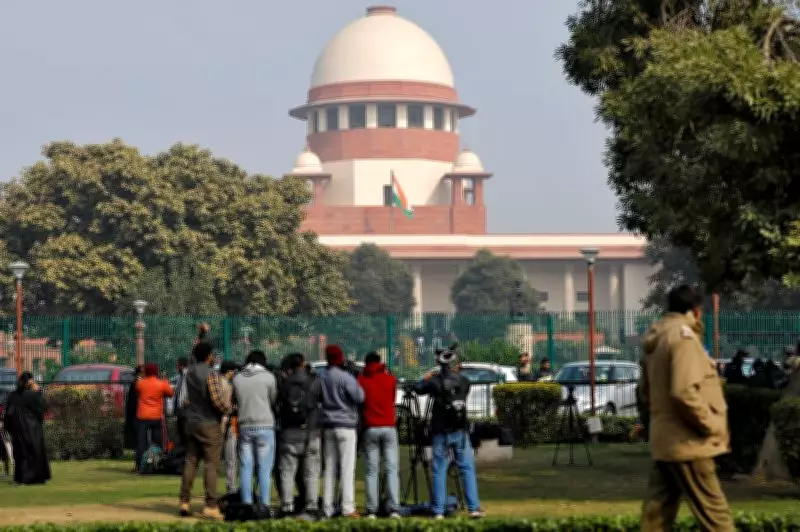
The Supreme Court on Tuesday observed that while considering the Sabarimala reference, it cannot annihilate the essence of religion in the name of reform. A nine-judge constitution bench, led by Chief Justice of India D.Y. Chandrachud, made the observation while hearing arguments on whether the practice of excluding women of a certain age group from the Sabarimala temple is an essential religious practice.
Key Observations by the Supreme Court
The bench noted that the court cannot destroy the core of a religion while attempting to reform it. It emphasized that there is a fine line between reforming a practice and completely uprooting the religion itself. The observation came during the hearing of a batch of petitions seeking a review of the 2018 judgment that allowed women of all ages to enter the Sabarimala temple.
Arguments Presented
Senior advocate K. Parasaran, appearing for the Travancore Devaswom Board, argued that the practice of restricting entry of women aged 10 to 50 years is an essential part of the Sabarimala tradition. He contended that the court should not interfere with religious beliefs that have been followed for centuries. The bench, however, questioned whether such practices could be tested on the touchstone of constitutional morality.

Constitutional Bench's Stance
The nine-judge bench is examining whether the court can determine the essentiality of a religious practice. The CJI remarked that the court cannot, in the name of reform, annihilate the religion itself. He added that the court must balance the right to freedom of religion with other fundamental rights, such as equality and non-discrimination.
Background of the Case
In September 2018, a five-judge constitution bench had lifted the ban on entry of women aged 10 to 50 years into the Sabarimala temple, citing gender equality. However, several review petitions were filed against the judgment, leading to the current reference to a larger bench. The nine-judge bench is also hearing other cases related to religious practices, including the entry of women into mosques and the practice of female genital mutilation in the Dawoodi Bohra community.
What Lies Ahead
The Supreme Court is expected to deliver a landmark verdict that could have far-reaching implications on the interpretation of religious freedom in India. The hearing will continue, with the bench hearing arguments from various stakeholders, including the Kerala government and the temple board.