
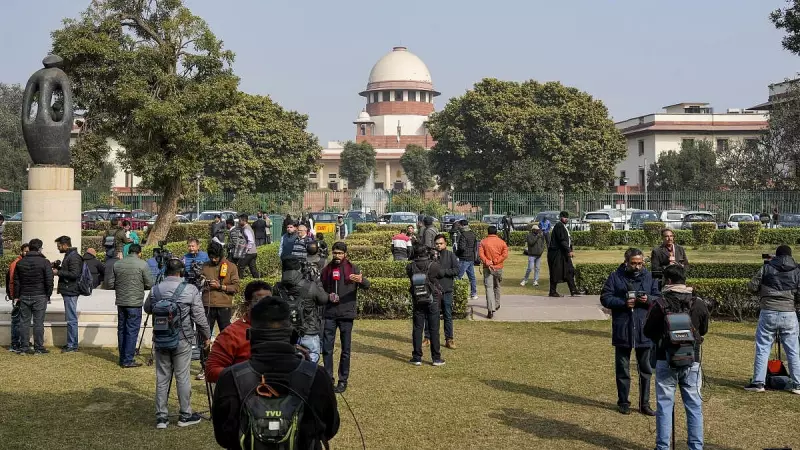
The Supreme Court of India has directed the central government and the Delhi government to actively consider the establishment of a special court dedicated to trying a significant case related to alleged ISIS links within the country. This pivotal suggestion came during a hearing concerning the bail application of an accused individual.
Bench Hears Bail Plea in Alleged Propaganda Case
A bench of the apex court, comprising Chief Justice Surya Kant and Justice Joymalya Bagchi, was presiding over the bail plea of Md Heydaitullah. The accused faces serious allegations of utilizing encrypted messaging platform Telegram to propagate the extremist ideology of the terrorist group ISIS within India. The charges further include accusations of attempting to recruit other persons to the cause through these online channels.
Rationale Behind the Special Court Proposal
The suggestion for a designated special court underscores the complexity and sensitivity of cases involving terrorism and online radicalization. Such courts are often envisaged to ensure expedited trials, specialized handling of evidence—particularly digital evidence from platforms like Telegram—and enhanced security measures. The Supreme Court's directive, issued on 06 January 2026, places the onus on both the Union and Delhi state administrations to evaluate the feasibility and necessity of this judicial mechanism for this specific prosecution.
Implications and Next Steps
The court's intervention highlights the judiciary's proactive stance in addressing modern terror-related challenges that leverage digital tools. The consideration of a special court aims to streamline the judicial process for a case that has national security implications. The bench's hearing of Md Heydaitullah's bail plea remains a separate but concurrent legal proceeding. The responses from the Centre and the Delhi government regarding the special court proposal are now awaited, which will determine the future course of this high-profile legal battle.
The development marks a critical juncture in India's legal approach to tackling cases of alleged terrorism and online propaganda, emphasizing the need for specialized judicial infrastructure to deal with such evolving threats effectively.