

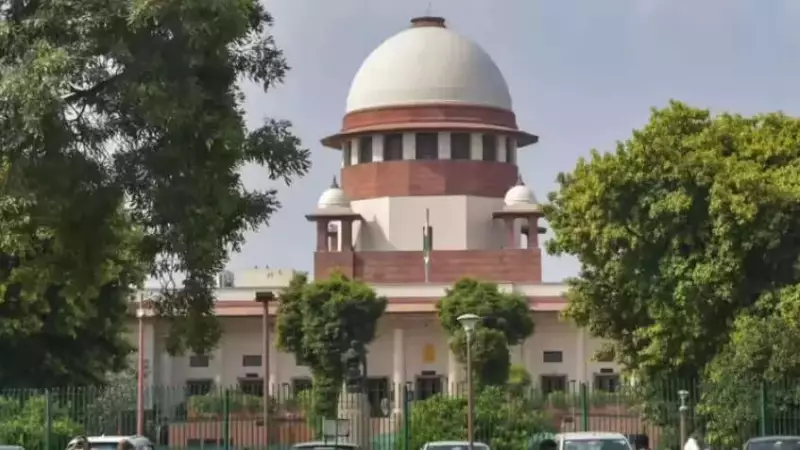
In a rare and candid observation, the Supreme Court of India has publicly acknowledged a disturbing pattern of potential misconduct within the judiciary. A bench led by Chief Justice of India Surya Kant expressed deep concern over a growing trend where judges pass a flurry of orders for "extraneous considerations" on the eve of their retirement.
The Case That Sparked the Remark
The court's strong comments came during a hearing on Wednesday concerning a petition filed by a principal district judge from Madhya Pradesh. The judicial officer was challenging his suspension, which occurred merely 10 days before his scheduled retirement on November 30. The suspension was allegedly linked to two judicial orders he had passed.
Drawing a cricket analogy, CJI Surya Kant, alongside Justice Joymalya Bagchi, remarked, "Petitioner just before retirement started hitting sixes. It is an unfortunate trend. I do not want to elaborate on it." This pointed statement underscored the bench's dismay at the perceived pattern of last-minute judicial activism.

Dispute Over Suspension for Judicial Orders
Senior advocate Vipin Sanghi, representing the officer, argued that his client had an impressive career record with excellent annual confidential reports. He questioned the legality of suspending an officer for judicial orders that could be appealed and corrected by a higher court. "How can an officer be suspended for judicial orders which can be appealed against and rectified by higher judiciary?" Sanghi asked.
The bench clarified its stance, noting that disciplinary proceedings cannot be initiated against a judicial officer merely for passing erroneous orders. However, they posed a critical counter-question: "But if the orders are palpably dishonest?" This distinction highlights the fine line between judicial error and alleged misconduct.
Increased Retirement Age and RTI Route Criticised
Complicating the timeline, the Supreme Court had, on November 20, directed the Madhya Pradesh government to postpone the judge's retirement by one year. This was due to the state increasing the retirement age of its employees to 62 years. Consequently, the officer is now set to retire on November 30, 2026.
The CJI pointed out a crucial detail: "The judicial officer did not know, when he passed those two orders, that his retirement age had been increased by one year." This fact adds another layer to the context of the alleged pre-retirement orders.
The bench also expressed disapproval of the officer's method of seeking information. They took exception to him using Right to Information (RTI) applications to ascertain the grounds for his suspension. "It is not expected of a senior judicial officer to resort to the RTI route to get information," the bench stated, suggesting a formal representation to the High Court would have been more appropriate.
Court's Final Directive and Broader Implications
The Supreme Court ultimately declined to entertain the petition directly. Instead, it provided a clear path for redressal. The bench directed the petitioner to make a representation to the Madhya Pradesh High Court, seeking a recall of the suspension order. It instructed the High Court to decide on this representation within a period of four weeks.
This case has brought into sharp focus an issue often discussed in hushed tones within legal circles. The Supreme Court's open acknowledgement of an "unfortunate trend" of judges passing questionable orders before retirement serves as a significant moment for judicial introspection and underscores the ongoing challenges in maintaining the integrity of the judicial process.






