

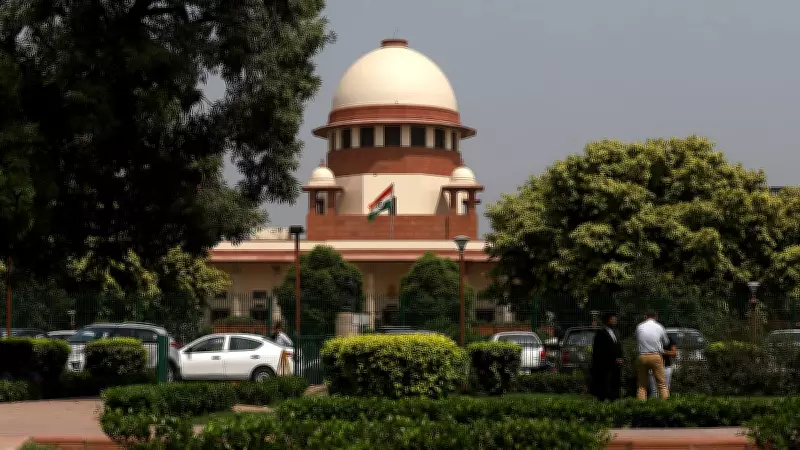
Supreme Court Upholds Ruling on Scheduled Caste Status for Christian Converts
In a significant legal decision, the Supreme Court of India has affirmed that individuals who convert to Christianity are not eligible to claim Scheduled Caste (SC) status. This ruling reinforces the existing legal framework that restricts SC recognition to followers of Hinduism, Sikhism, or Buddhism.
Court's Decision and Background
The apex court upheld an order from the Andhra Pradesh High Court, which had previously stated that no person professing a religion other than Hinduism, Sikhism, or Buddhism can be regarded as a member of a Scheduled Caste. This judgment clarifies the boundaries of SC status in the context of religious conversion, particularly to Christianity.
The Supreme Court's decision is based on constitutional provisions and historical precedents that define Scheduled Castes primarily within the Hindu social structure, with extensions to Sikhism and Buddhism due to their origins and practices in India. The court emphasized that conversion to Christianity alters an individual's social and religious identity, thereby affecting their eligibility for SC benefits.

Implications of the Ruling
This ruling has several important implications:
- Legal Clarity: It provides clear guidelines on who can claim SC status, reducing ambiguity in legal and administrative processes.
- Social Impact: The decision may affect the access of Christian converts to reservations and other welfare schemes designed for Scheduled Castes.
- Religious Dynamics: It highlights the complex interplay between religion and caste in India, where caste-based identities are often intertwined with specific faiths.
The Supreme Court's judgment underscores the principle that Scheduled Caste status is not merely a matter of birth but is also linked to religious affiliation as defined by law. This has been a contentious issue in Indian jurisprudence, with previous cases exploring similar themes.
Context and Reactions
This ruling comes amid ongoing debates about religious conversion and its effects on social benefits in India. Legal experts note that the decision aligns with existing statutes, such as the Constitution (Scheduled Castes) Order, 1950, which originally limited SC status to Hindus and was later amended to include Sikhs and Buddhists.
Reactions to the judgment are expected to vary, with some groups supporting it as a preservation of the intent behind SC reservations, while others may view it as restrictive for converts seeking social justice. The court's emphasis on adhering to the constitutional framework suggests a cautious approach to expanding SC eligibility beyond the specified religions.
In summary, the Supreme Court's ruling firmly establishes that conversion to Christianity disqualifies individuals from Scheduled Caste status, upholding a long-standing legal interpretation that ties caste benefits to specific religious communities in India.






