

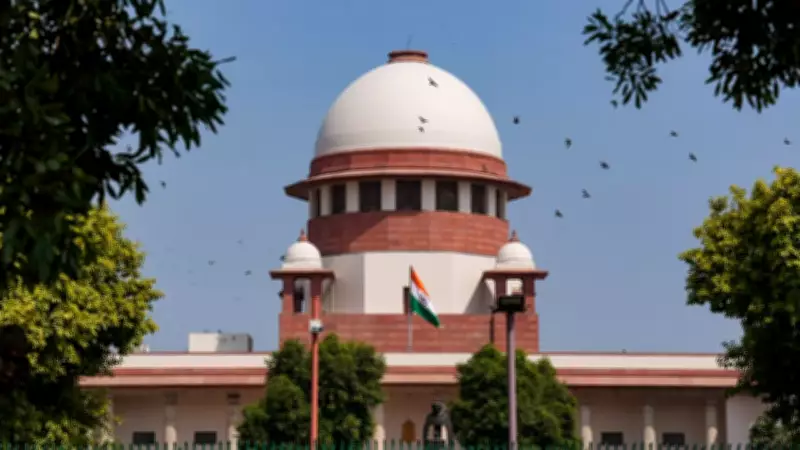
Supreme Court Rebukes West Bengal Government Over Metro Construction Delays
The Supreme Court of India delivered a sharp reprimand to the West Bengal government on Monday, accusing it of "creating roadblocks" in the ongoing construction of a crucial Kolkata Metro corridor. A bench led by Chief Justice Surya Kant, alongside Justices Joymalya Bagchi and Vipul M Pancholi, dismissed the state's appeal and directed the Calcutta High Court to maintain vigilant oversight of the project.
Court Warns Against Politicizing Public Infrastructure
In a strongly worded observation, CJI Surya Kant cautioned the state administration against politicizing a developmental initiative designed to benefit ordinary citizens. "We would not appreciate the state government politicizing a developmental issue, which is beneficial for the common man," Justice Kant stated. He further emphasized, "We must not politicize everything. This is a developmental issue. It is a facility for the common man. Don't create roadblocks."
The bench highlighted what it termed a "complete dereliction of constitutional duty" by West Bengal authorities. It pointed out that the Calcutta High Court had shown considerable leniency, noting that this was a fit case where the chief secretary, DGP, and other officials could have faced disciplinary action for non-compliance.

State's Arguments Dismissed as Inadequate
When the state's legal counsel attempted to justify delays by citing the model code of conduct and ongoing board examinations, the Supreme Court bench found these explanations unconvincing. Justice Bagchi specifically addressed the election-related concern, stating, "The Election Commission will not have a difficulty in allowing the project. This was a project launched before the commencement of the model code of conduct."
The court questioned why the West Bengal government had failed to implement the high court's directions issued on December 23, 2025. "What prevented the state government from complying with the directions since then?" the bench inquired, revealing skepticism about the administration's commitment to the project.
Festivals Versus Development Priorities
In a particularly pointed exchange, Justice Bagchi contrasted the state's priorities, noting, "For you, festivals are more important than development. It is not that you are willing, you are duty-bound. You told the high court that you have festivals to take care of. Is a festival more important than the construction of a transport artery?"
The bench expressed disappointment that a democratically elected government would approach the judiciary seeking to delay essential infrastructure. "We do not appreciate a democratically elected government knocking on the door of the court and asking for this to be ignored," Justice Bagchi remarked.
Construction Timeline and Specific Roadblocks
The legal dispute centers on the Metro line connecting Sector V, Salt Lake's IT hub, with south Kolkata. Construction has been stalled at the Chingrighata crossing on the Eastern Metropolitan Bypass due to disagreements over roadblock permissions. While most of the Kavi Subhash–Sector V line is complete, this critical junction has remained inactive for an extended period.
The Calcutta High Court had previously mandated that authorities inform Metro Railway by January 6 about the three days required for road closure. It further ordered that construction of overhead Metro tracks be finalized by February 15, 2026.
Supreme Court Rejects Further Delays
When the state counsel requested additional time until May to comply with high court directives, citing potential impacts on ambulances and emergency vehicles, the Supreme Court firmly rejected the plea. The bench warned that the appeal against the December 23 order would be dismissed if the state persisted in its delaying tactics.
"This merely exhibits the obstinate attitude of the authorities, wherein they want to delay and stall the Metro rail project in Kolkata," the bench observed. It affirmed that there was "no infirmity in the order passed by the high court" and expressed confidence that the project would be completed within the stipulated timeframe.

The Supreme Court's intervention underscores the judiciary's role in ensuring that vital public infrastructure projects proceed without unnecessary political interference, prioritizing the long-term benefits to Kolkata's commuting public.





