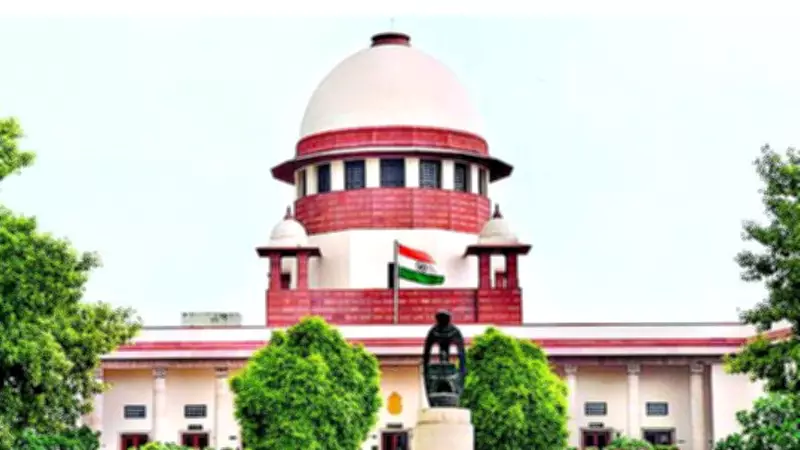
Supreme Court Advocates Iron-Fisted Response to Racially Motivated Crimes
In a significant hearing on Wednesday, the Supreme Court of India emphasized the urgent need for stringent measures against racially motivated attacks, citing the tragic death of Anjel Chakma in Uttarakhand last December. A bench comprising Chief Justice Surya Kant and Justices Joymalya Bagchi and Vipul M Pancholi declared that individuals who assault others based on appearance, language, race, region, or origin must be dealt with an iron hand.
Petitioner Highlights Pattern of Racial Violence
The case was brought before the court by petitioner Anoop Prakash Awasthi, who detailed repeated instances of violence targeting people from north-eastern states across India. Awasthi argued that such attacks, driven solely by physical features, often involve racial slurs and abuse. He pointed out that the killing of Anjel Chakma is not an isolated event but part of a longstanding pattern, including the 2014 death of Nido Taniam and numerous assaults on students and workers in metropolitan cities.
"This phenomenon has been formally acknowledged by the government in parliamentary replies, yet remains unaddressed through any dedicated legislative or institutional framework," Awasthi stated, urging the court to intervene.
Court's Reluctance to Enter Legislative Domain
While expressing deep concern, the CJI-led bench showed reluctance to step into the legislative arena by establishing a mechanism under penal law to prevent group-perpetrated violence based on race, place of birth, and language. The bench underscored India's strong federal character, rooted in unity amidst cultural, linguistic, and regional diversity, and warned that such crimes must not be allowed to undermine it.
"Those who attack people for their appearance, language, race, region, or origin must be dealt with an iron hand," the bench asserted, highlighting the gravity of the issue.
Guidelines Sought, but Deferred to Government
Awasthi had requested the court to lay down guidelines, similar to the Vishaka judgment that addressed sexual harassment at workplaces, to prevent violence against individuals based on race, region, and language until Parliament enacts a specific law. However, the bench opined that this matter would be better handled by the government, emphasizing the need for executive action.
The court directed Awasthi to provide a copy of the petition to Attorney General R Venkataramani and requested the AG to engage with relevant authorities in the Union government to address the issue. This move signals the judiciary's push for administrative and legislative solutions rather than judicial overreach.
Broader Implications for National Unity
This hearing brings to light the persistent challenges faced by marginalized communities, particularly those from north-eastern states, in the face of racial discrimination. The Supreme Court's firm stance serves as a reminder of the constitutional mandate to protect all citizens, regardless of their background. As the case progresses, it underscores the critical need for comprehensive policies and enforcement mechanisms to combat racial violence and uphold India's diverse social fabric.