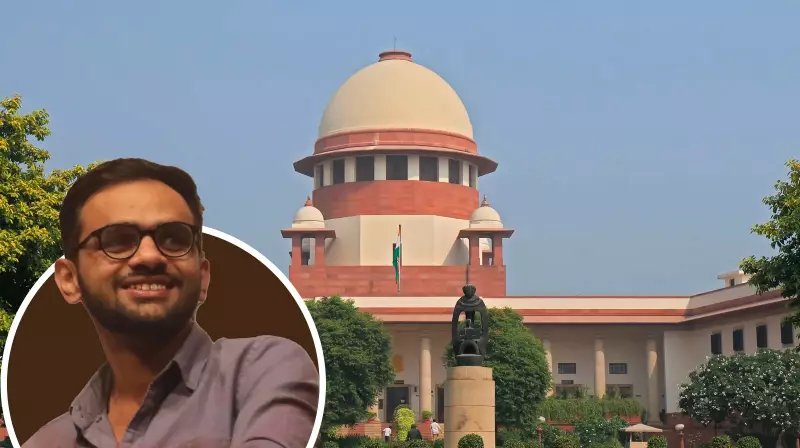
The Supreme Court of India is set to pronounce a crucial verdict on Monday, deciding the bail pleas of several accused in the high-profile 2020 Delhi communal riots case. The judgment, to be delivered by a bench of Justices Aravind Kumar and N V Anjaria, will determine the immediate fate of former JNU student leader Umar Khalid and activist Sharjeel Imam, among others.
Background and High Court's Stance
This apex court decision comes after the Delhi High Court rejected the bail applications of nine accused on September 2, 2025. The individuals denied bail were Umar Khalid, Sharjeel Imam, Gulshifa Fathima, Meeran Haider, Athar Khan, Abdul Khalid Saifi, Mohd Saleem Khan, Shifa-ur-Rehman, and Shadab Ahmed. In its order, the High Court had characterized the riots not as spontaneous protests but as a "premeditated, well-orchestrated conspiracy."
It is noteworthy that three other accused—Natasha Narwal, Devangana Kalita, and Asif Iqbal Tanha—were granted bail by the High Court in June 2021. Former Congress councillor Ishrat Jahan was also released on bail in March 2022.

Contested Legal Arguments
The legal battle in the Supreme Court saw intense arguments from both sides. The Delhi Police, represented by Additional Solicitor General S V Raju, vehemently opposed bail. The prosecution contended that the violence, which resulted in 53 deaths, was part of a larger "criminal conspiracy" aimed at "regime change." They alleged the conspiracy was timed with the February 2020 visit of then-US President Donald Trump to attract global media attention and portray the Citizenship Amendment Act (CAA) negatively.
Police further argued that the accused were responsible for trial delays and should not benefit from them. They claimed to possess "ocular and irrefutable documentary as well as technical evidence" showing the petitioners' deep involvement in engineering nationwide communal riots.
Defense Counters Police Claims
The defense counsel strongly rebutted these allegations. Senior advocate Kapil Sibal, representing Umar Khalid, argued that police had no evidence to back their claim that Khalid instigated rioters. Sibal pointed out that the speech cited by police was delivered in Amaravati, Maharashtra, on February 17, while the riots occurred in Delhi between February 23 and 25, a period during which Khalid was not in the capital.
Senior advocate A M Singhvi, appearing for accused Gulfisha Fatima, challenged the new "regime change" argument, stating it was never part of the original chargesheet or argued in lower courts. He suggested it was introduced to prejudice the Supreme Court. Singhvi questioned, "They say it’s a pan India conspiracy to separate Assam from India? Regime change aspect was never argued in the HC or trial court."
The hearings also featured the playing of alleged inflammatory speeches in court. Meanwhile, the trial in the main case is progressing slowly at the sessions court, currently at the stage of arguments on charge. With over 700 witnesses listed, the trial is not expected to conclude soon. The next hearing in the trial court is scheduled for January 8.