

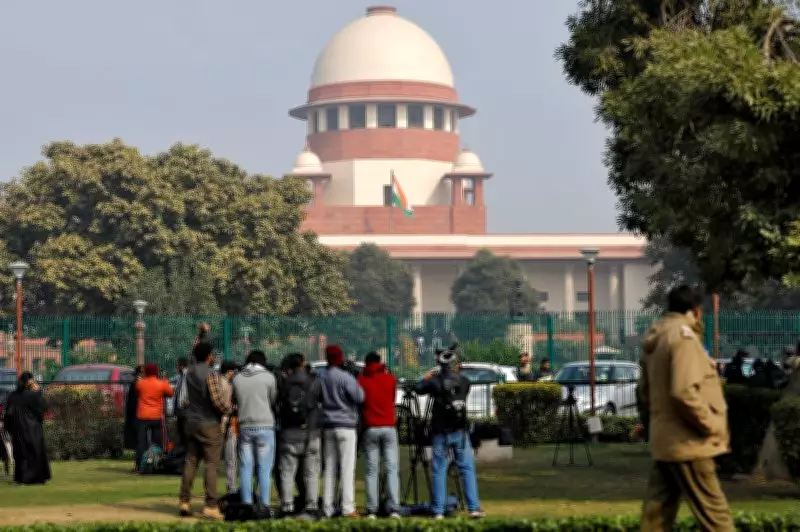
Supreme Court Acknowledges Complexity in Defining Essential Religious Practices
The Supreme Court of India has made a significant observation regarding the judicial interpretation of religious practices under the Constitution. In a recent deliberation, the apex court highlighted the inherent difficulties faced by the judiciary in laying down universal or prospective guidelines to test what constitutes an essential religious practice. This issue is central to the protection of religious freedom as enshrined in Article 25 of the Indian Constitution, which guarantees the right to freely profess, practice, and propagate religion.
Challenges in Judicial Standardization
The court emphasized that religious practices are deeply rooted in diverse traditions, beliefs, and customs that vary widely across different communities and regions. Attempting to create a one-size-fits-all framework for determining essentiality could lead to oversimplification and potential infringement on the autonomy of religious groups. The judiciary must navigate a delicate balance between upholding constitutional principles and respecting the pluralistic nature of Indian society.
This stance reflects a cautious approach, acknowledging that courts are not equipped to act as arbiters of theological doctrines. Instead, they must rely on case-specific analyses, considering factors such as historical evidence, scriptural authority, and the significance of a practice to the faith community. The Supreme Court's remarks underscore the need for a nuanced and context-sensitive methodology in adjudicating matters of religious essentiality.

Implications for Religious Freedom and Legal Precedents
The difficulty in establishing universal guidelines has profound implications for the protection of religious freedom in India. Without clear-cut standards, courts may face inconsistencies in rulings, potentially leading to legal uncertainty. However, this flexibility also allows for a more tailored approach that can accommodate the unique characteristics of each religious practice. The Supreme Court's observation suggests a preference for judicial restraint, avoiding broad pronouncements that could inadvertently limit religious liberties.
This perspective aligns with previous judgments where the court has emphasized the importance of preserving the essence of religious practices while ensuring they do not contravene public order, morality, or health. The challenge lies in distinguishing between core religious tenets and peripheral customs, a task that requires deep engagement with religious texts and community testimonies.
Future Directions and Judicial Prudence
Moving forward, the Supreme Court's acknowledgment of these challenges may influence how lower courts handle cases involving religious practices. It calls for a heightened level of judicial prudence, where decisions are made on a case-by-case basis, with careful consideration of all relevant evidence. This approach, while more labor-intensive, is seen as necessary to uphold the constitutional mandate of religious freedom without imposing rigid frameworks.
The court's stance also highlights the ongoing dialogue between law and religion in India, where the judiciary plays a critical role in mediating conflicts while respecting cultural diversity. As legal experts and religious scholars continue to debate these issues, the Supreme Court's cautious position serves as a reminder of the complexities inherent in balancing individual rights with communal traditions in a secular democracy.






