Supreme Court Refers Stone Crusher Dispute to Uttarakhand High Court
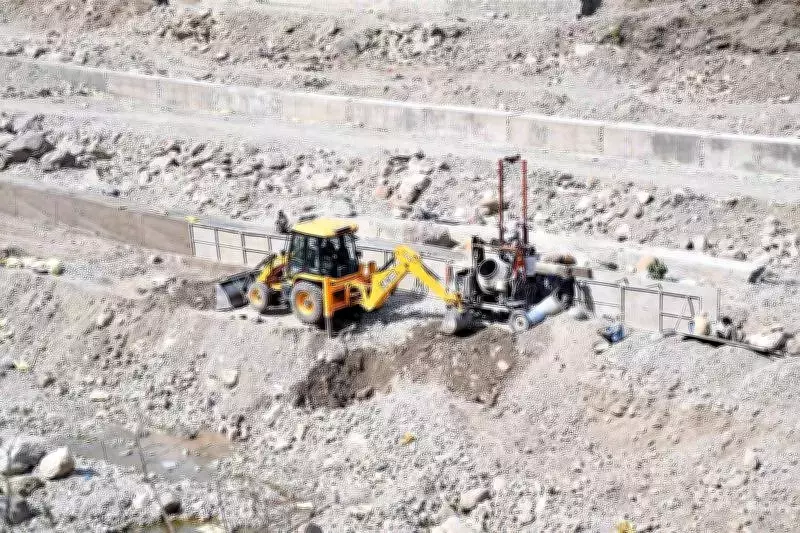
The Supreme Court of India has issued a directive in a significant environmental case, instructing a petitioner to seek recourse through the Uttarakhand High Court. This decision pertains to the ongoing legal battle surrounding the operation of a stone crusher unit located near the Song river in Dehradun district.
Petition Challenges High Court's Interim Stay Order
A bench comprising Chief Justice Joymalya Bagchi and Justice Vipul M Pancholi was hearing a petition filed by Doon Valley Stone Crusher. The petition challenged the Uttarakhand High Court's interim stay order dated January 7, which had suspended the stone crusher's operations. The Supreme Court bench observed that the High Court, scheduled to reopen after its winter vacation on Monday, February 9, would be the most appropriate judicial forum for the petitioner to seek necessary relief and modifications to the interim order.
The court explicitly stated: "It seems to us that the correct recourse for the petitioner would be to approach the HC to seek modification of the interim order and to bring on record the set of facts based on which the petitioner claims that the Song river, near the site where the petitioner–stone crusher is operational, is non-perennial."
Background of the Legal Dispute
The case originated from a petition filed in the Uttarakhand High Court by Gurcharan Singh, a local resident of Sangatiyawala Kalan village in Doiwala, Dehradun district. Singh sought a complete ban on the operation of the stone crusher, alleging that it was functioning within a mere 105 meters of the Song river, which has been officially classified as a perennial water body.
The petitioner's legal counsel argued that this proximity violates Clause 7 of the Uttarakhand Stone Crusher, Screening Plant, Mobile Stone Crusher, Mobile Screening Plant, Pulverizer Plant, Hot Mix Plant, Ready Mix Plant Permission Policy, 2021. This regulation explicitly prohibits the establishment of any stone crusher within 500 meters of a perennial river. Supporting this claim, counsel presented evidence obtained through a Right to Information (RTI) response from the irrigation department, confirming that the Song river stretch from Kalu Siddh to Fatehpur Tanda is classified as perennial, with the stone crusher unit located within this specific area.
Conflicting Claims and High Court's Initial Ruling
In contrast, the counsel representing the state government presented a joint inspection report that contended the Song river is not, in fact, a perennial river. After carefully considering the submissions from both sides, the Uttarakhand High Court issued its interim order on January 7. The court imposed a stay on the stone crusher's operations until the next scheduled hearing.
The High Court's order included several stringent directives:
- The Pollution Control Board was instructed to suspend the operating licence of the stone crusher unit.
- The Dehradun District Magistrate was ordered to disconnect the electricity and water supply to the facility.
- The next hearing in the matter was originally scheduled for April 28.
Supreme Court's Directive and Forward Path
The Supreme Court, in its recent hearing, has now formally requested the Uttarakhand High Court to entertain the petitioner's application upon its reopening. The apex court has urged the High Court to consider preponing the next date of hearing to expedite the resolution of this environmentally sensitive case. This judicial referral underscores the principle of appropriate forum jurisdiction, emphasizing that the High Court is best positioned to evaluate the local factual matrix, including the critical determination of whether the Song river is perennial or non-perennial in the disputed stretch.
The case highlights the ongoing tension between industrial activities and environmental protection laws in ecologically sensitive regions like Uttarakhand. The final decision from the Uttarakhand High Court will have significant implications for regulatory compliance and the enforcement of distance norms for industrial units operating near water bodies in the state.