Supreme Court Dismisses Petition Against Telangana Chief Minister Revanth Reddy
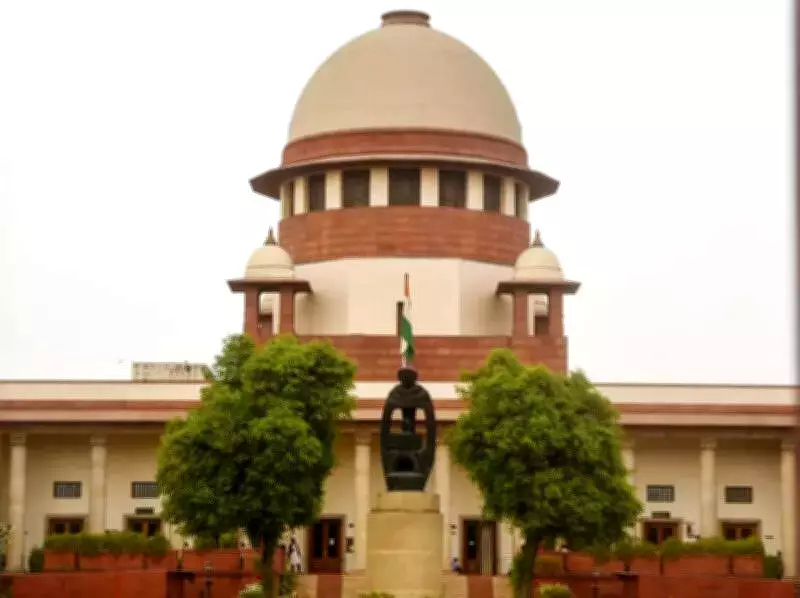
The Supreme Court of India on Monday firmly dismissed a petition that sought to challenge the Telangana High Court's decision to quash a 2016 criminal case against Chief Minister A Revanth Reddy. In a significant ruling, a three-judge bench led by Chief Justice Surya Kant, along with Justices Joymalya Bagchi and Vipul Pancholi, upheld the High Court's view, stating that no prima facie case existed to proceed against the former parliamentarian.
Court Criticizes Litigation as Political Maneuvering
During the hearing, the bench made strong observations, remarking that the litigation appeared to be an attempt to use the judiciary for a "political battle" and to gain "political mileage." The court emphasized that such actions undermine the judicial process and should not be entertained.
Background of the 2016 Case
The underlying case dates back to 2016 when Revanth Reddy, then serving as the Member of Parliament for Malkajgiri, was allegedly involved in an incident at a SC Mutually Aided Cooperative Housing Society in Gachibowli, Hyderabad. According to the complainant, N Peddi Raju, a group of individuals trespassed into the society, vandalized property using JCB trucks, and hurled casteist slurs at him when he tried to intervene. Charges were filed under the Scheduled Castes and Scheduled Tribes (Prevention of Atrocities) Act.
Scrutiny of Evidence and Legal Arguments
The Supreme Court conducted a thorough scrutiny of the evidence presented in the case. Justice Joymalya Bagchi pointed out that the links between Revanth Reddy and the alleged crime were based on hearsay and inferential logic rather than direct proof. The court also noted the petitioner's history of prior enmity with the Chief Minister, which raised questions about the motives behind the petition.
While the petitioner's counsel argued that actual physical presence at the scene was unnecessary for a charge of abetment, the bench maintained that the Telangana High Court had already conducted a comprehensive review of the investigative materials. The Supreme Court found no grounds to interfere with this assessment.
Representation and Final Order
Senior advocate Siddharth Luthra, representing Revanth Reddy, described the petitioner as an "adventurous litigant" with a track record of filing vexatious cases. Taking this submission on record, the Supreme Court stated they could "read between the lines" of such political disputes, implying an understanding of the underlying motivations.
In its final order, the bench concluded that the High Court's view was plausible under the circumstances. The Supreme Court ruled that no interference was warranted, as the evidence collected during the investigation failed to substantiate the allegations against the Chief Minister. This decision reinforces the judiciary's role in filtering out frivolous cases and upholding legal standards.