

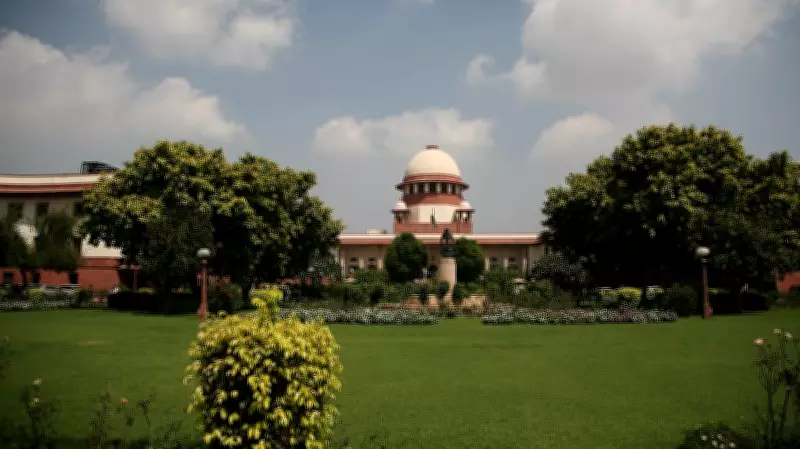
Supreme Court Rejects Petition Against MHA Circular on Vande Mataram
The Supreme Court of India has dismissed a plea challenging a circular issued by the Ministry of Home Affairs (MHA) regarding the singing of the national song Vande Mataram. The court described the petition as being founded on what it termed a "vague apprehension of discrimination." This decision underscores the judiciary's stance on matters of national symbolism and administrative directives.
Court Questions Basis of Petition
During the proceedings, Justice Bagchi, presiding over the bench, raised critical questions about the nature of the MHA circular. He inquired whether the circular explicitly specified any penal consequences for individuals who choose not to sing Vande Mataram. Furthermore, Justice Bagchi asked if there had been any documented instances where a person was removed from a congregation or faced disciplinary action solely for not participating in the singing of the national song.
The court's line of questioning aimed to assess the practical implications and enforceability of the circular, highlighting that the petitioner's concerns might be speculative rather than based on concrete evidence of discrimination or coercion.

Details of the MHA Circular
The MHA circular in question pertains to the observance and promotion of national symbols, including Vande Mataram. While the exact contents of the circular were not detailed in the court's ruling, it is understood to encourage the singing of the national song in various public and official settings as a gesture of patriotism and national unity.
However, the circular does not appear to mandate compulsory participation or outline specific penalties for non-compliance, a point emphasized by the Supreme Court during its deliberation.
Legal and Social Implications
This ruling has significant implications for how national symbols are perceived and implemented in India. By dismissing the plea, the Supreme Court reinforces the principle that administrative guidelines should not be challenged on grounds of hypothetical discrimination without substantiated proof of harm or infringement of rights.
The decision also reflects the broader legal framework surrounding freedom of expression and cultural practices, balancing national pride with individual liberties. It sets a precedent for future cases involving similar circulars or directives related to national observances.
Public and Political Reactions
While the court's verdict is final, it may spark discussions among various stakeholders, including civil society groups, political parties, and legal experts. Some may view it as a validation of the government's efforts to foster national unity, while others might argue for greater clarity in such circulars to prevent potential misuse or misinterpretation.
The ruling comes at a time when issues of nationalism and cultural identity are increasingly prominent in public discourse, making this case particularly relevant to ongoing debates about the role of state directives in promoting national values.
Conclusion
In summary, the Supreme Court's dismissal of the plea against the MHA circular on Vande Mataram highlights the importance of evidence-based legal challenges. By terming the petition as based on vague apprehensions, the court has underscored the need for concrete instances of discrimination before such administrative measures can be contested. This decision not only resolves the immediate legal dispute but also contributes to the evolving jurisprudence on national symbols and individual rights in India.






