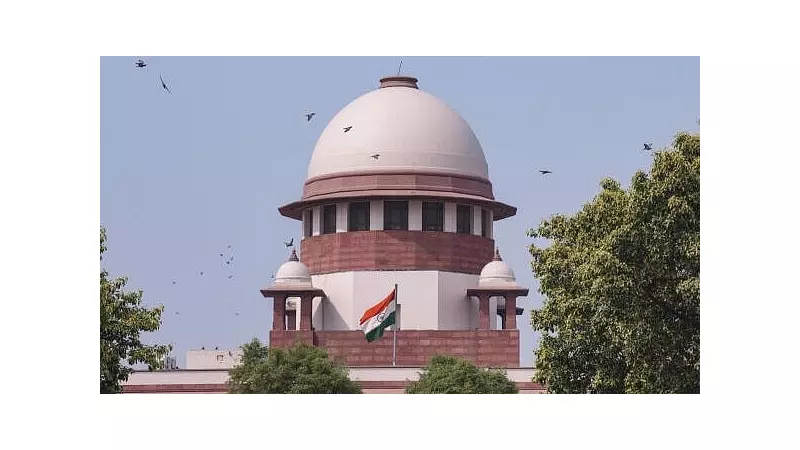
The Supreme Court of India has dismissed a petition that sought to prevent Prime Minister Narendra Modi from offering a ceremonial 'chadar' at the revered Ajmer Sharif Dargah in Rajasthan. This decision marks a significant moment, reinforcing the court's stance on such ceremonial interventions.
Bench Refuses to Entertain the Plea
A bench comprising Chief Justice Surya Kant and Justice Joymalya Bagchi heard the plea on Monday, 05 January 2026. The judges declined to entertain the petition, effectively bringing the legal challenge to a close. The plea had not only sought to restrain the Prime Minister's visit but had also challenged the extension of state-sponsored ceremonial honour and symbolic recognition to the Islamic scholar Khwaja Moinuddin Chishti and to the Ajmer Dargah by the Union government and its agencies.
Details of the Dismissed Petition
The petition presented before the apex court argued against the government's involvement in religious ceremonies. It specifically targeted the planned act of the Prime Minister offering a 'chadar' – a sacred cloth covering – at the shrine of the 13th-century Sufi saint. The plea contended that such actions by the state and its instrumentalities blurred the lines between governance and religion.
However, the bench, after hearing the arguments, found no merit in the petition and refused to grant it a hearing. This swift dismissal underscores the judiciary's perspective on the limits of judicial intervention in matters of state protocol and ceremonial traditions.
Implications and Broader Context
The dismissal of this plea has several immediate implications. Firstly, it clears the path for Prime Minister Narendra Modi to proceed with his visit and participation in the ritual at the dargah, an act often seen as a gesture of communal harmony and respect for India's diverse spiritual heritage.
Secondly, the court's refusal to question the state's symbolic recognition of figures like Khwaja Moinuddin Chishti sets a precedent. It indicates a judicial reluctance to interfere in long-standing cultural and ceremonial practices that involve state figures, unless a clear constitutional violation is demonstrated.
The Ajmer Sharif Dargah is one of the most important Sufi pilgrimage sites in the world, attracting millions of devotees from all faiths every year. Visits by political leaders to such shrines are not uncommon and are generally viewed through a socio-political lens, symbolizing unity and shared cultural spaces.
This Supreme Court order, dated 05 January 2026, thus reaffirms the existing status quo, allowing such traditions to continue without judicial hindrance based on the specific arguments presented in this case.