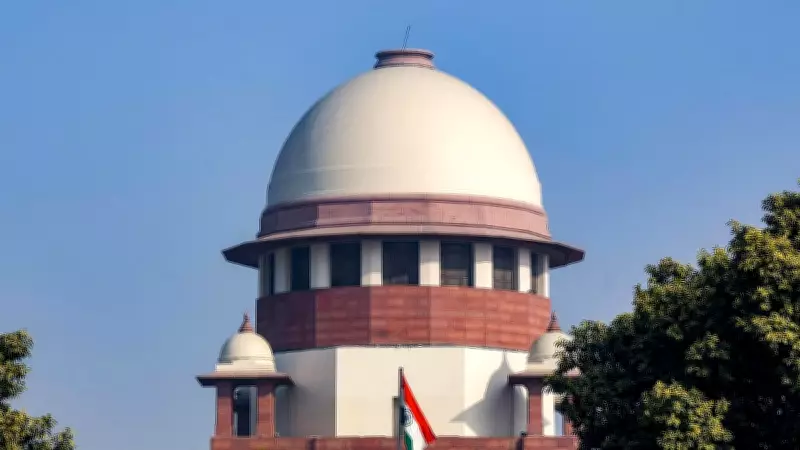
The Supreme Court of India has dissolved the marriage of an Army officer and his wife, a qualified BDS doctor, emphasizing that compelling spouses to remain in a failed union serves no constructive purpose. The decision came as the court allowed the couple's joint petition for divorce by mutual consent under Article 142 of the Constitution, which empowers the apex court to pass orders necessary for complete justice.
Case Background
The marriage between the couple was solemnized on April 19, 2017. The husband is an Army officer, while the wife holds a Bachelor of Dental Surgery (BDS) degree. However, the relationship faced irreconcilable differences, leading to separation. Both parties approached the Supreme Court seeking dissolution of their marriage.
Court's Observation
A bench comprising Justices observed that when a marriage has irretrievably broken down, forcing the spouses to stay bound serves no purpose. The court noted that the couple had been living separately for a considerable period, and there was no possibility of reconciliation. The judgment highlighted that prolonging a dead marriage only causes further emotional distress and hardship to both parties.

Legal Implications
The Supreme Court exercised its extraordinary powers under Article 142 to grant divorce by mutual consent, bypassing the mandatory six-month waiting period typically required under the Hindu Marriage Act, 1955. The court directed that the husband pay a permanent alimony of Rs 25 lakh to the wife, which she accepted. The settlement was reached amicably between the parties.
Significance of the Ruling
This ruling reinforces the judiciary's stance that marriage is a social institution meant for companionship and mutual growth, and not a binding chain. The Supreme Court has consistently held that once a marriage has irretrievably broken down, it is in the interest of both parties to part ways amicably. The decision also underscores the court's willingness to use its constitutional powers to deliver substantive justice in cases where legal formalities may cause undue delay.
The dissolution was granted on June 7, 2026, and the court expressed hope that both individuals would move forward in their lives with dignity and respect.