

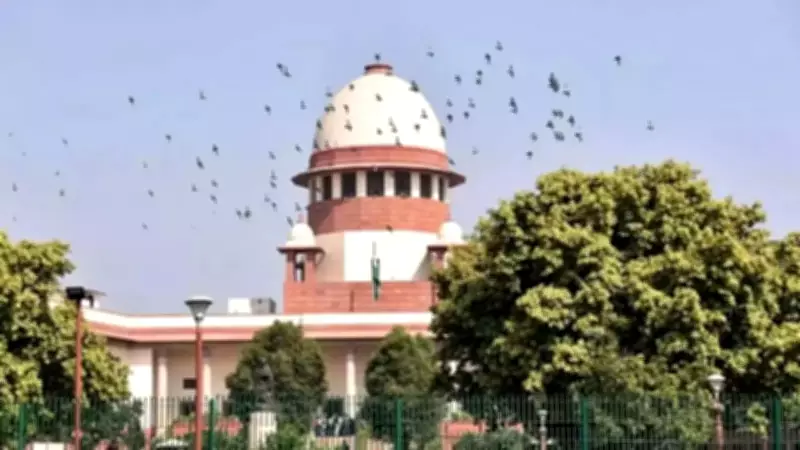
Supreme Court Clarifies Government Liability for Requisitioned Vehicle Accidents
In a landmark judgment with significant implications for administrative procedures, the Supreme Court of India has established a clear principle regarding liability for accidents involving private vehicles requisitioned by government authorities. The apex court has ruled that when a district administration requisitions a private vehicle for public functions and an accident occurs during this period, the liability for compensation rests squarely with the government, not with the vehicle owner's insurance company.
The Core Legal Principle
A bench comprising Justices Sanjay Karol and N K Singh delivered this crucial verdict, stating unequivocally: "Where a vehicle is requisitioned for public functions and an incident occurs during the period of such requisition, liability ought properly to be borne by the requisitioning authority, and not by the insurer engaged by the owner for the vehicle's regular and voluntary use."
The justices elaborated that when government authorities requisition a private vehicle, the owner is effectively divested of custody and control. During this compulsory deployment period, the owner neither directs the vehicle's use nor derives any benefit from it. Consequently, if an unfortunate accident occurs, responsibility must logically rest with the requisitioning authority rather than the insurer contracted by the owner for normal, voluntary usage.

Case Background: The Gwalior Accident
The judgment stemmed from a tragic incident dating back to January 2010. A bus owned by Kidzee Corner School in Gwalior had been formally requisitioned by the district administration for conducting gram panchayat elections. While deployed for this official electoral duty, the bus collided with a motorcyclist, resulting in the rider's death.
The Motor Accident Claims Tribunal initially awarded compensation of Rs 5.1 lakh with 6% interest to the victim's family. However, in a significant development in 2024, the Supreme Court substantially enhanced this compensation to Rs 27 lakh, recognizing the gravity of the loss and the circumstances of the accident.
Rejecting Government Arguments
The district administration had argued that fastening liability on civic authorities would send an inappropriate signal and create administrative complications. The Supreme Court bench firmly rejected this contention, emphasizing the fundamental principles of justice and responsibility.
Justice Karol, who authored the judgment, provided clear reasoning: "During this period, the owner neither directs its use nor derives any benefit from it. It only stands to reason that in such circumstances, if an untoward incident occurs, responsibility would properly rest with the requisitioning authority and not with the insurer engaged by the owner."
Insurance Contract Limitations
The court further clarified the limitations of insurance coverage in such scenarios. The justices noted that compelled deployment for public functions cannot reasonably be characterized as "regular use" of the vehicle. To impose liability upon the insurer in these circumstances would essentially extend the insurance contract beyond the specific risks that were originally agreed upon and covered.
"Compelled deployment for public functions cannot reasonably be characterised as 'regular use'... To fasten liability upon the insurer... would be to extend the contract beyond the risk that was agreed to be covered," the bench stated, establishing a clear boundary between voluntary private use and compulsory public deployment.
Broader Implications
This judgment establishes important precedents for several stakeholders:

- For Government Authorities: District administrations must exercise greater diligence and responsibility when requisitioning private vehicles, recognizing they assume full liability during the deployment period.
- For Vehicle Owners: Private citizens and institutions gain protection from insurance claim denials when their vehicles are compulsorily deployed for public functions.
- For Insurance Companies: Insurers receive clarity that their coverage applies only to voluntary, regular use as defined in policy contracts.
- For Accident Victims: Affected parties can seek appropriate compensation directly from government authorities in such cases, potentially streamlining the claims process.
The Supreme Court's ruling reinforces the principle that with authority comes responsibility, particularly when government actions directly impact private property and public safety. This decision is expected to influence how district administrations across India approach vehicle requisitioning for elections, disaster management, and other public functions, ensuring greater accountability in administrative processes.





