

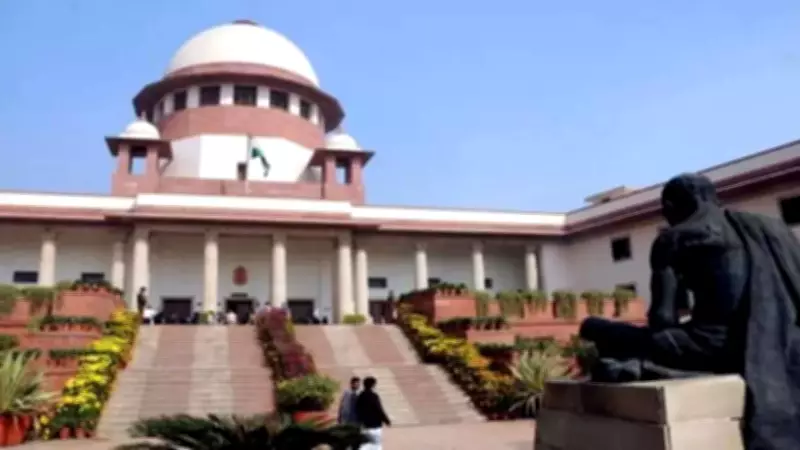
Supreme Court Sounds Alarm Over Mobile Phone Media Trend Endangering Fair Trials
The Supreme Court of India voiced profound apprehension on Friday regarding the pervasive phenomenon where every individual equipped with a mobile phone transforms into an instant media outlet, uploading videos directly to social media platforms. The apex court emphasized that such widespread practices present a severe jeopardy to the fundamental right of accused individuals to receive a fair and impartial trial.
PIL Highlights Police Social Media Practices
A bench comprising Chief Justice Surya Kant, Justice Joymalya Bagchi, and Justice Vipul M. Pancholi made these observations while adjudicating a Public Interest Litigation (PIL). The petition raised allegations that police departments frequently post videos and photographs of arrested individuals on their official social media accounts. This action, the PIL contended, prematurely shapes public opinion, potentially leading citizens to unjustly blame the judiciary if an accused is later acquitted due to insufficient evidence.
"Every Person With a Mobile Phone Has Become Media"
The bench concurred with the arguments presented by senior advocate Gopal Sankaranarayanan, who highlighted that "every person with a mobile phone has become media." The justices noted a disturbing societal shift where, in the event of an accident, bystanders instinctively reach for their phones to record content, even when a victim is critically injured and bleeding on the roadway.

Justice Bagchi directed the petitioner to broaden the scope of the plea. Instead of focusing solely on police social media handles—for which all state police forces have been granted a three-month deadline by the Supreme Court to develop and adhere to a Standard Operating Procedure (SOP) concerning police-media interactions—the petition should advocate for a comprehensive regulatory mechanism. This framework would encompass police communications, traditional media outlets, and the vast, unregulated realm of social media.
Challenges of Atomized Social Media and "Digital Arrest"
Justice Bagchi elaborated on the core issue, stating, "The problem is the atomised social media." He pointed out that while police conduct might be regulated through the forthcoming SOP, a significant challenge remains with conventional media, social media platforms, and the general public. "Comparatively, TV channels are much more restrained, even though one might disagree with their views," he added.
Solicitor General Tushar Mehta supported these concerns, characterizing certain social media tabloids as "blackmailers" in a deliberate understatement. Chief Justice Surya Kant drew a parallel to a "different facet of digital arrest," referencing a troubling trend in towns and cities distant from the national capital. In these areas, individuals often falsely parade as media personnel, boldly displaying credentials on their vehicles to pursue hidden agendas and ulterior motives.
Broader Implications and the Path Forward
Advocate Sankaranarayanan provided a related example, noting knowledge of legal professionals who affix "Supreme Court Advocate" stickers to their automobiles to avoid highway toll payments—an abuse of professional stature. Recognizing that safeguarding the right to a fair trial demands a holistic strategy, the bench recommended the petitioner withdraw the current plea and reintroduce it with an expanded purview after April. This timeline aligns with the expected implementation of the police-media SOP, allowing for a more integrated examination of the issue.
The Supreme Court's stern warning underscores the urgent need to balance the democratization of media through mobile technology with the imperative to protect judicial integrity and the rights of the accused in the digital age.






