

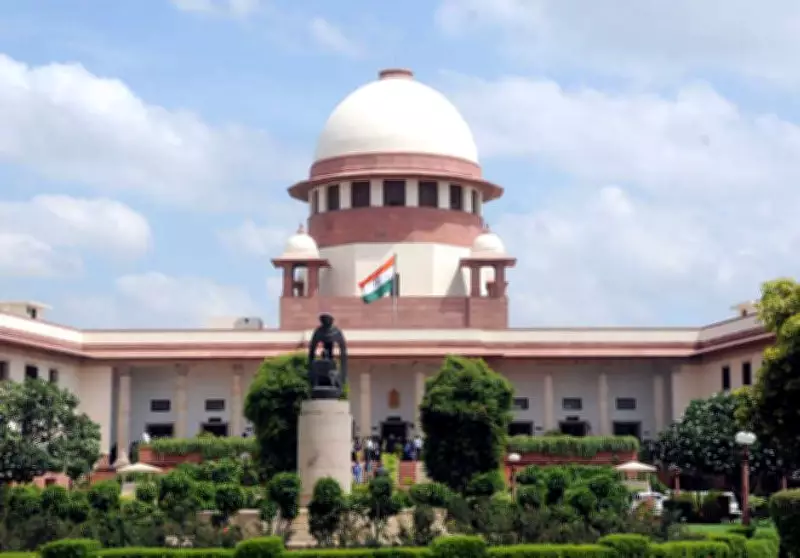
Supreme Court Clarifies Election Law: Runner-Up Declared Winner in Two-Candidate Contests
The Supreme Court of India has delivered a significant judgment, stating that when an election involves only two candidates and the winning candidate's election is declared null and void, there is no need for a fresh poll. Instead, the runner-up should be directly declared the winner. This ruling overturns a previous order by the Odisha High Court that had mandated a new election in such cases.
Case Background and Legal Proceedings
A Bench comprising Justice Vikram Nath and Justice Sandeep Mehta issued this decision, setting aside the Odisha High Court's directive for a fresh election. The case pertained to the election for the chairperson of the Delang Panchayat Samiti in Odisha, held in 2022. The only two contestants were appellant Ramadebi Rautray and respondent Basanti Sahoo. After Sahoo was declared elected, Rautray challenged the election under Section 45(1)(v) of the Orissa Panchayat Samiti Act, 1959, alleging that Sahoo was disqualified due to having a third child beyond the legal cut-off date.
The Election Tribunal found the disqualification proven based on uncontroverted evidence and declared Sahoo's election void. Invoking Section 44-J(2)(b) of the same Act, the tribunal then declared Rautray as the duly elected Chairperson, citing her as the sole remaining candidate. However, the Appellate Tribunal and subsequently the Odisha High Court upheld the disqualification but set aside Rautray's declaration, ordering a fresh election instead.

Supreme Court's Rationale and Final Order
In the judgment authored by Justice Mehta, the Supreme Court firmly stated that the declaration made by the Election Tribunal in favor of Rautray was just, legal, and equitable. The court criticized the Appellate Tribunal and High Court for their reasoning, noting that they erred in suggesting that other members of the Delang Panchayat Samiti should be given an opportunity to contest the post. The Bench emphasized that since only two candidates had contested, setting aside Rautray's declaration was unwarranted.
The Supreme Court restored the Election Tribunal's decision, declaring Rautray elected as the Chairperson. The Bench's order, dated March 10, directed that consequential steps for compliance be taken within two weeks. This ruling clarifies that in elections with a limited field of two candidates, the legal framework supports the automatic elevation of the runner-up upon the winner's disqualification, avoiding unnecessary electoral processes.
Key Implications of the Ruling- Efficiency in Electoral Disputes: The judgment streamlines the resolution of election disputes by eliminating the need for fresh polls in two-candidate scenarios.
- Legal Precedent: It sets a clear precedent for similar cases under the Orissa Panchayat Samiti Act and potentially other election laws.
- Focus on Candidate Eligibility: Highlights the importance of candidate disqualifications and their direct impact on election outcomes.
This decision underscores the Supreme Court's role in interpreting election laws to ensure fairness and practicality, particularly in local governance contexts like panchayat elections.






