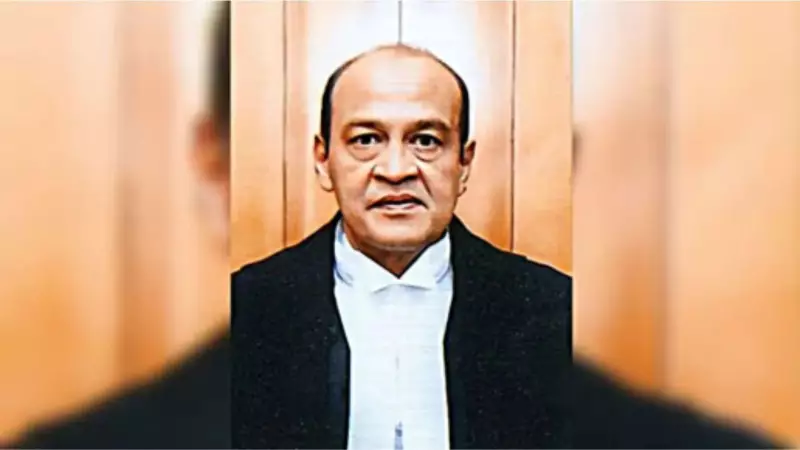
The Supreme Court of India on Wednesday expressed its preliminary disagreement with a contention made by Allahabad High Court judge, Justice Yashwant Varma. Justice Varma had challenged the legality of a Parliamentary Committee constituted by the Lok Sabha Speaker to probe a matter involving the recovery of burnt cash from his official residence in Delhi.
The Core Legal Challenge
A bench comprising Justices Dipankar Datta and S C Sharma was hearing a writ petition filed by Justice Varma. The petition challenged the formation of the committee under the Judges (Inquiry) Act, 1968. The central argument from Justice Varma's side, presented by Senior Advocate Mukul Rohatgi, hinged on Section 3(2) of the Act.
Rohatgi argued that the committee could only be set up after both the Lok Sabha and the Rajya Sabha had accepted a motion for impeachment. Since the Rajya Sabha Deputy Chairman had rejected the motion, the Lok Sabha Speaker's unilateral constitution of the committee was illegal. He also raised a procedural question regarding whether the Deputy Chairman could reject the motion in the absence of the Rajya Sabha Chairman, who had resigned.
Supreme Court's Preliminary View
Justice Datta, responding to the arguments, stated the court's initial position clearly. "Prima facie, we are not with Mr Rohatgi on the construction of the proviso and on the point about the Deputy Chairman's authority," he observed. The bench clarified that while a joint committee would have been formed if both Houses admitted the motion, the law does not explicitly bar the Lok Sabha Speaker from forming a committee if the Rajya Sabha rejects it.
However, the court did not dismiss the petition outright. It decided to examine a narrower, critical issue: whether the formation of a single-house committee, instead of a joint one, was so prejudicial to Justice Varma's interests that it warranted the Supreme Court's intervention under Article 32 of the Constitution.
Focus on Prejudice and Next Steps
Justice Datta framed the limited question for consideration. He noted that had the Rajya Sabha admitted the motion, Justice Varma would have had the benefit of a joint committee. "Now, whether it is so prejudicial to your interest that, under Article 32, we should interfere?" the bench asked, granting time until Thursday for Rohatgi to ponder this specific point.
The bench also made an observation about a note from the Secretary General, suggesting it contained something that "should not have been there," acknowledging a degree of infirmity. Yet, it questioned whether this infirmity was severe enough to quash the entire committee proceedings. The hearing has been adjourned, with the next date set for Thursday.