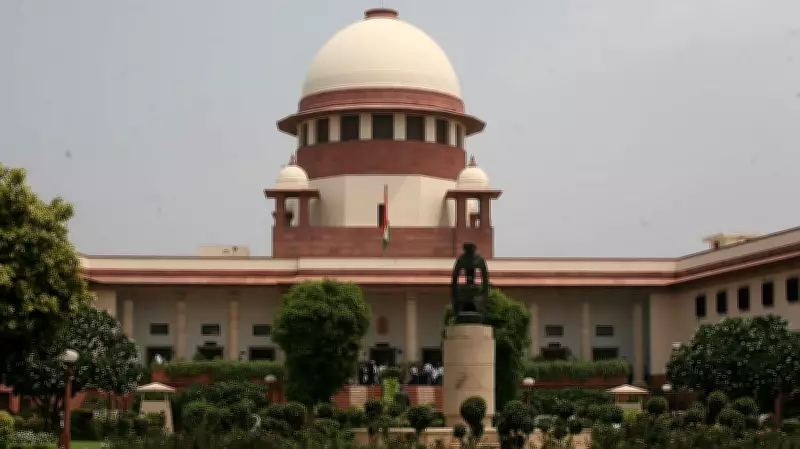
Supreme Court Directs NIA to File UAPA Report in Murshidabad Violence Case
The Supreme Court of India has issued a significant directive to the National Investigation Agency (NIA), ordering the federal agency to submit a comprehensive report to the Kolkata High Court. This report must detail the rationale and legal basis for invoking the stringent Unlawful Activities (Prevention) Act (UAPA) in a specific case that is linked to the ongoing and troubling incidents of violence in West Bengal's Murshidabad district.
Judicial Concern Over Recurring Unrest
This judicial intervention follows a prior expression of deep concern by the Kolkata High Court on January 20, 2026. The High Court had highlighted the repeated and disturbing pattern of violence and civil unrest plaguing Murshidabad district. In its earlier order, the court had explicitly directed the local police and district administration to take all necessary measures to ensure that peace and public order are maintained in the region.
The Supreme Court's latest order effectively escalates the judicial scrutiny of the situation. By mandating the NIA to file its report directly with the High Court, the apex court is ensuring a higher level of accountability and transparency in how anti-terror laws are being applied in this sensitive context. The NIA's report is expected to clarify the specific circumstances and evidence that warranted the use of the UAPA, a law known for its strict provisions regarding bail and investigation timelines.

Background of the Murshidabad Situation
Murshidabad district in West Bengal has been a flashpoint for communal and political tensions, leading to several episodes of violence over recent years. The High Court's January directive underscored the urgent need for administrative and law enforcement action to curb this cycle of unrest. The involvement of the NIA, which typically handles cases of national security and terrorism, indicates the perceived severity of the incidents under investigation.
The Supreme Court's instruction does not pre-judge the case but establishes a procedural framework. The High Court will now review the NIA's UAPA application report, which could influence future proceedings, including potential charges, investigations, and the legal strategies of all parties involved.
Legal experts suggest this move by the Supreme Court reinforces the judiciary's role in overseeing the application of powerful laws like the UAPA, ensuring they are not used arbitrarily and that due process is strictly followed, especially in regions experiencing persistent law and order challenges.