

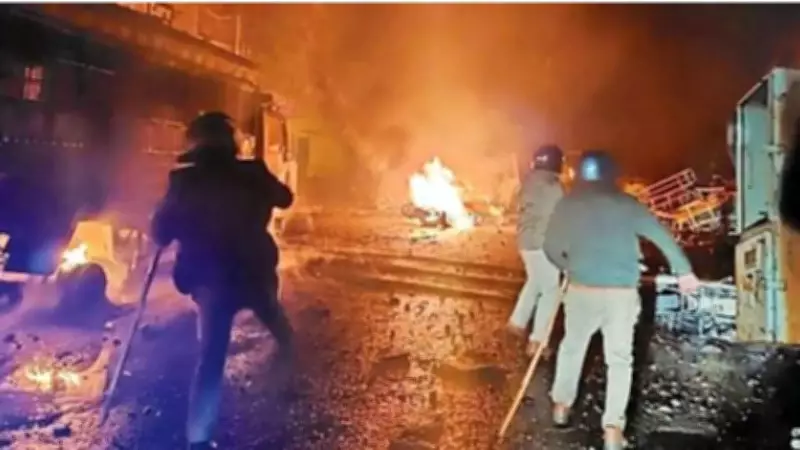
The Supreme Court has overturned the Uttarakhand High Court's order granting default bail to Javed Siddiqui and Arshad Ayub in the Banphoolpura violence case, terming the High Court's decision a grave error in facts as well as in law.
Supreme Court's Ruling
A bench of Justice Vikram Nath and Justice Sandeep Mehta, on May 4, ruled that the respondents were not entitled to default bail. The investigation was validly extended under the Unlawful Activities (Prevention) Act, the chargesheet was filed within the extended period, and the accused approached the High Court only after the investigation had concluded.
Background of the Case
The case arose from an FIR registered on February 8, 2024, at Banphoolpura police station in Haldwani. The incident involved arson, rioting, and extensive damage to public property, including the police station building. The respondents were arrested on February 9, 2024, and booked under multiple provisions of the Indian Penal Code, the Prevention of Damage to Public Property Act, the Criminal Law Amendment Act, the Arms Act, and sections 15 and 16 of the UAPA.

Investigation Timeline
The Supreme Court recorded that before the expiry of the initial 90-day period from arrest, the investigating agency moved an application on May 10, 2024, under Section 43D(2)(ii)(b) of the UAPA seeking more time to complete the investigation and continue detention for another 28 days. Notice was served on the accused, their counsel were heard, and the trial court passed a detailed order extending the time to complete the probe. A default bail plea filed by the accused on June 3, 2024, was rejected by the trial court. The investigation period was then extended again on June 6 and July 1, and the chargesheet was finally filed on July 7, 2024, within the extended deadline ending July 11.
High Court's Decision
The High Court granted default bail in January 2025, criticizing the pace of investigation and observing that only eight official witnesses and four public witnesses were examined in three months. The Supreme Court rejected that reasoning, calling the High Court's assessment factually incorrect. It noted the state's submission that statements of 65 witnesses were recorded within the 90-day period.
Given the scale of the alleged crime, the number of accused, the allegation of use of petrol bombs and other weapons, and the existence of similar incidents in nearby areas leading to separate FIRs, the Supreme Court held that the investigation was proceeding with utmost expediency.
Delay in Challenging Orders
The apex court emphasized that the respondents did not promptly challenge the extension orders or the rejection of default bail. Instead, they waited until September 2024 to approach the High Court, by which time the investigation was completed and the chargesheet had been filed. The Supreme Court held that the respondents lost the right to default bail by delaying their challenge until after the chargesheet was filed. They were directed to surrender within two weeks, though they remain free to seek regular bail on merits.






