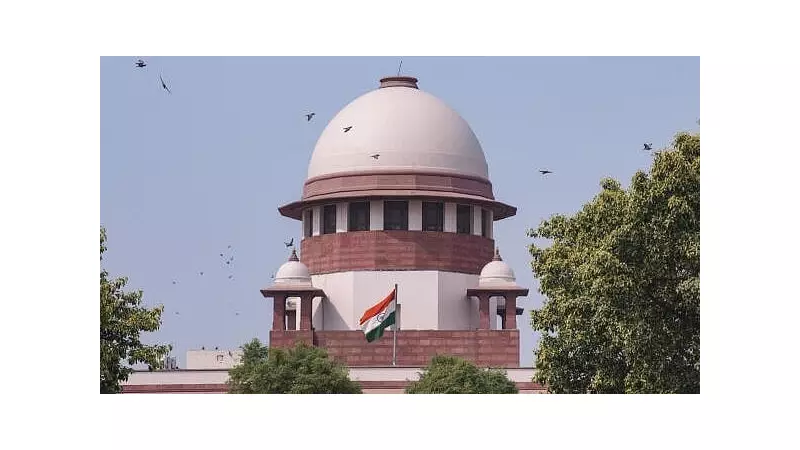
In a significant legal development, the Supreme Court of India has delivered a nuanced observation regarding the powers of the Lok Sabha Speaker in constituting an inquiry committee. The apex court has stated that there is no initial, or prima facie, legal bar preventing the Speaker from setting up a panel to probe allegations against a judge. However, the court has also pointed out apparent procedural flaws in the specific case concerning Justice Yashwant Varma.
Court's Key Observations on Procedural Infirmity
The bench, while hearing the matter, made a critical remark that there appears to be "some infirmity" in the manner in which Lok Sabha Speaker Om Birla constituted the inquiry committee. This observation, made on 07 January 2026, forms the crux of the current judicial scrutiny. The court clarified that its role at this stage is not to halt the proceedings outright but to examine the nature and gravity of the identified defect.
The core question now before the Supreme Court is whether the procedural shortcoming is severe enough to invalidate the entire process. The court has explicitly stated it will examine whether the defect is grave enough to warrant termination of the proceedings. This indicates a careful, step-by-step judicial approach, balancing the Speaker's authority with the necessity of following due process.
Implications for Parliamentary Authority and Judicial Independence
This case sits at a delicate intersection of parliamentary privilege and judicial independence. By acknowledging that there is no prima facie bar on the Speaker's power to initiate such an inquiry, the Supreme Court has, in principle, upheld a dimension of parliamentary autonomy. Yet, by highlighting the infirmities in the process, it underscores that even such powers must be exercised within a framework that ensures fairness and procedural correctness.
The outcome of the Supreme Court's examination will set a crucial precedent. It will define the boundaries of how parliamentary inquiries into members of the judiciary can be constituted, ensuring they are not only empowered but also impeccably structured to withstand legal scrutiny. The decision will be closely watched for its impact on the separation of powers between the legislature and the judiciary.
What Comes Next?
The proceedings before the inquiry panel are allowed to continue for now, but under the shadow of the Supreme Court's pending review. The legal arguments will likely focus on the specifics of the "infirmity" noted by the court. Legal experts anticipate detailed submissions on the composition, mandate, or the procedural rules followed while setting up the panel to probe the matters involving Justice Yashwant Varma.
The Supreme Court's final ruling will provide much-needed clarity. It will determine if the current inquiry can proceed to its conclusion or if the process must be restarted afresh with corrected procedures, a decision with significant political and constitutional ramifications.