

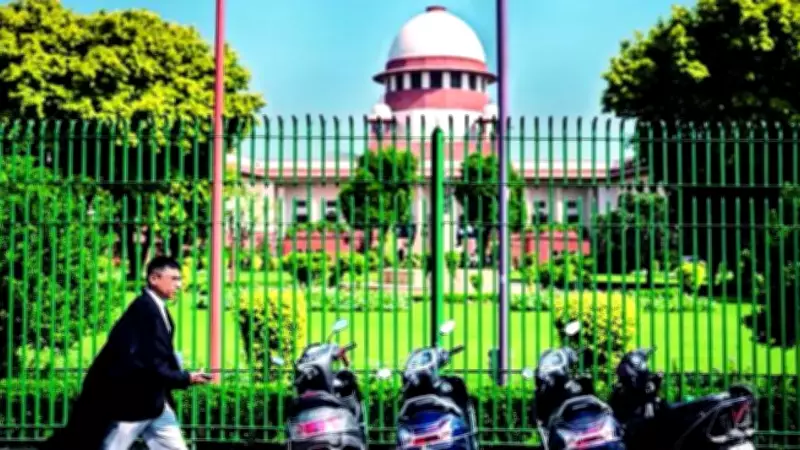
Supreme Court Voices Concern Over PIL Seeking Distinct Census Enumeration for DNT Tribes
The Supreme Court of India, on Tuesday, expressed strong disapproval regarding a Public Interest Litigation (PIL) that sought a distinct enumeration of denotified, nomadic, and semi-nomadic tribes (DNTs) during the forthcoming census exercise. A bench comprising Chief Justice Suryakant and Justice Joymalya Bagchi raised serious questions about the underlying motives behind the petition.
Bench Questions Motives Behind the PIL
During the hearing, the bench directly addressed Siddharth Dave, the counsel representing the petitioner, suggesting that the PIL's primary aim was to secure Scheduled Caste (SC) or Scheduled Tribe (ST) status for these groups. The bench remarked, "These are very calculated moves; there's nothing spontaneous or sudden about them. These are very deep-rooted moves to divide India, maybe an attempt instigated from outside the country. An inquiry can reveal the truth." This statement highlighted the court's concern that such petitions could potentially fragment Indian society rather than promote unity.
Arguments Presented by the Petitioner
Senior advocate Siddharth Dave argued on behalf of the petitioner, emphasizing the historical context of the DNT tribes. He pointed out that these communities were stigmatized under the repealed Criminal Tribes Act of 1871 and have faced long-standing marginalization. Dave contended that despite repeated recommendations since 2000 from bodies like the National Human Rights Commission (NHRC) and other commissions, the government has failed to take concrete steps for their proper enumeration in the census. This lack of action, he argued, perpetuates their invisibility and hinders their access to welfare schemes and rights.

Court's Emphasis on a Class-less Society
In response, the bench underscored India's ongoing efforts to create a class-less society, free from divisions based on caste or tribe. The bench stated, "When India is making efforts for creation of a class-less society, there are petitions every day in the court seeking sub-categorisation or sub-classification of people for creation of a separate identity." This observation reflects the judiciary's cautious approach towards petitions that might reinforce social stratification, even as it acknowledges the need to address historical injustices.
Broader Implications and Context
The PIL touches on a sensitive issue in Indian socio-political discourse, balancing the need for affirmative action with the goal of social cohesion. Denotified, nomadic, and semi-nomadic tribes have historically been among the most marginalized groups in India, often excluded from mainstream development initiatives. Their enumeration in the census is seen as a crucial step for accurate data collection, which can inform targeted policies and resource allocation. However, the Supreme Court's skepticism suggests a wary stance towards any move perceived as divisive, especially in a nation striving for greater unity.
This case also highlights the ongoing tension between legal advocacy for minority rights and judicial concerns about national integrity. As India prepares for its next census, the outcome of this PIL could have significant ramifications for how DNT communities are recognized and supported in the future. The court's call for an inquiry into the motives behind the petition adds a layer of complexity, indicating that the issue extends beyond mere administrative enumeration to deeper questions of intent and impact on social harmony.






