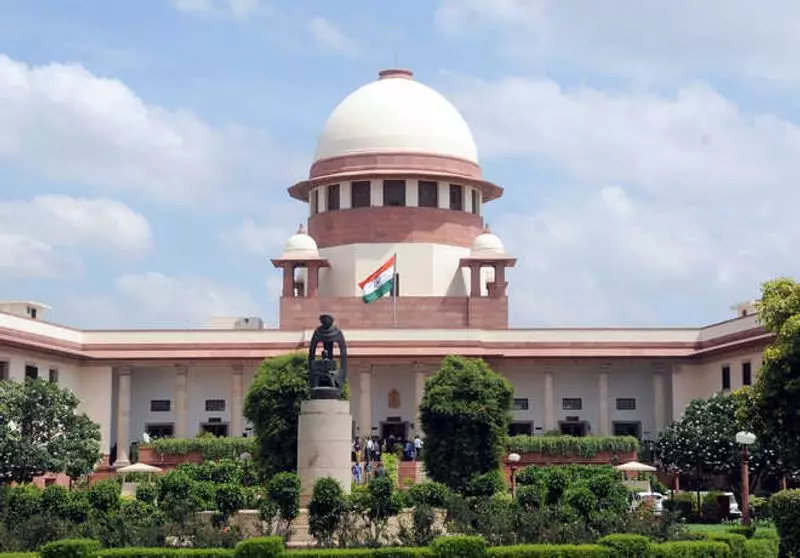
The Supreme Court of India has raised pointed questions regarding the selective forensic examination of audio recordings that allegedly feature the voice of Manipur Chief Minister N. Biren Singh. The apex court's scrutiny came during a hearing on a petition filed by Singh, challenging a Manipur High Court order that had directed a forensic analysis of these clips.
Court's Skepticism on Forensic Process
A bench comprising Justices B.R. Gavai and Sandeep Mehta expressed significant doubts about the methodology employed. The court questioned why only specific segments of the audio conversations were sent for forensic testing, rather than the complete recordings. The bench observed that such a selective approach could potentially compromise the integrity and reliability of the entire forensic science laboratory (FSL) report. This line of inquiry underscores a fundamental legal principle: evidence presented before a court must be complete and untainted by procedural irregularities to ensure a fair judicial process.
Background of the Legal Dispute
The controversy stems from audio clips that were circulated, purportedly containing conversations involving Chief Minister Biren Singh. Based on these clips, the Manipur High Court, in an order dated July 10, 2023, had directed the Central Forensic Science Laboratory (CFSL) in Chandigarh to examine their authenticity. Challenging this order, Singh approached the Supreme Court, arguing that the clips were doctored and maliciously edited. His legal team contended that the selective submission of audio portions was prejudicial and failed to provide the full context of the alleged conversations.
Implications for Legal Proceedings
The Supreme Court's intervention brings to the fore critical issues concerning digital evidence in the Indian legal system. The court's skepticism about partial forensic analysis sets a crucial precedent. It emphasizes that law enforcement and investigative agencies must ensure that evidence sent for expert examination is comprehensive and not cherry-picked to suit a particular narrative. The bench has sought detailed responses from the opposing parties and the state authorities, adjourning the matter for further hearing. The outcome of this case could have far-reaching implications for how audio and video evidence is treated in courts across the country, especially in politically sensitive matters.
The hearing, which took place on a date following the High Court's July 2023 order, continues to be closely watched. It touches upon the intersection of technology, law, and politics, testing the robustness of legal frameworks against the challenges posed by digitally manipulated media. The Supreme Court's final ruling will provide much-needed clarity on the standards for admitting such electronic evidence in judicial proceedings.