Supreme Court Rebukes Jairam Ramesh, Dismisses Writ Petition on Retrospective Environmental Clearances
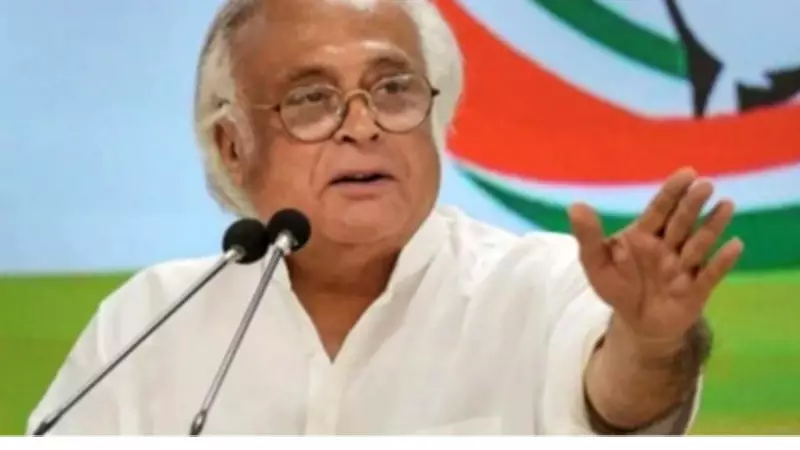
The Supreme Court of India delivered a sharp rebuke to Congress leader and Rajya Sabha MP Jairam Ramesh on Thursday, refusing to entertain his writ petition that challenged the Central government's decision to grant ex post facto environmental clearances. The bench, led by Chief Justice of India Surya Kant and including Justice Joymalya Bagchi, stated that the petition amounted to an "indirect attempt" to seek a review of the court's own judgment that had approved the policy. The court questioned the maintainability of the writ and warned of imposing high costs, suggesting the filing might have been for "media publicity."
Court Questions Motives and Maintainability of the Petition
During the hearing, Chief Justice Surya Kant directly asked Ramesh's counsel, "For what purpose this has been filed? You are very well aware that now a three-judge bench has taken a view." The court referenced its landmark judgment from November 18, 2025, which, by a 2:1 majority, recalled an earlier ruling from May 16 that had struck down a government notification allowing environmental clearances for projects after their commencement. This policy, known as ex post facto clearance, has been a contentious issue in environmental law.
The bench further emphasized that the government had issued an office memorandum (OM) in compliance with the Supreme Court's November judgment. "How the writ is maintainable? The Government has issued a notification in compliance with the Supreme Court Judgment. By challenging it, you are indirectly seeking a review of the judgment. How is it possible?" the CJI inquired. When the counsel argued that the petition also targeted the post-judgment OM, the court remained unconvinced, highlighting the procedural impropriety of filing a writ against its own ruling.

Background of the Environmental Clearance Controversy
The legal dispute traces back to petitions, including one by Mumbai-based NGO Vanashakti, which challenged two office memorandums issued by the Ministry of Environment, Forest and Climate Change. The key developments include:
- 2017 Notification: Offered a one-time amnesty window from March to September 2017, allowing approvals for projects that had commenced without prior environmental clearance under the 2006 Environmental Impact Assessment Notification.
- 2021 OM: Issued in compliance with a National Green Tribunal order, it outlined a standard operating procedure for handling violation cases.
- November 2025 Judgment: The Supreme Court's 2:1 majority decision recalled the May ruling, effectively reinstating the policy for ex post facto clearances, leading to the subsequent government OM.
Ramesh's petition sought to challenge this framework, invoking the court's extraordinary jurisdiction to halt retrospective clearances, which critics argue undermine environmental protections by regularizing violations after the fact.
Outcome and Implications
Faced with the court's stern questioning and the threat of high costs, Ramesh's counsel opted to withdraw the petition. The Supreme Court dismissed it as withdrawn, granting the petitioner liberty to challenge the November 2025 judgment through proper legal channels, such as a review petition, in accordance with the law. This episode underscores the judiciary's firm stance against what it perceives as attempts to circumvent established legal procedures, particularly in high-profile environmental cases. It also highlights the ongoing tensions between development policies and environmental safeguards in India, with political figures like Jairam Ramesh actively contesting government actions in court.
The Supreme Court's warning about costs and media publicity serves as a cautionary note for future litigants, emphasizing the need for substantive legal grounds rather than procedural maneuvers in challenging judicial decisions. As environmental governance remains a critical issue, this case adds to the discourse on balancing regulatory compliance with project approvals in a rapidly developing economy.