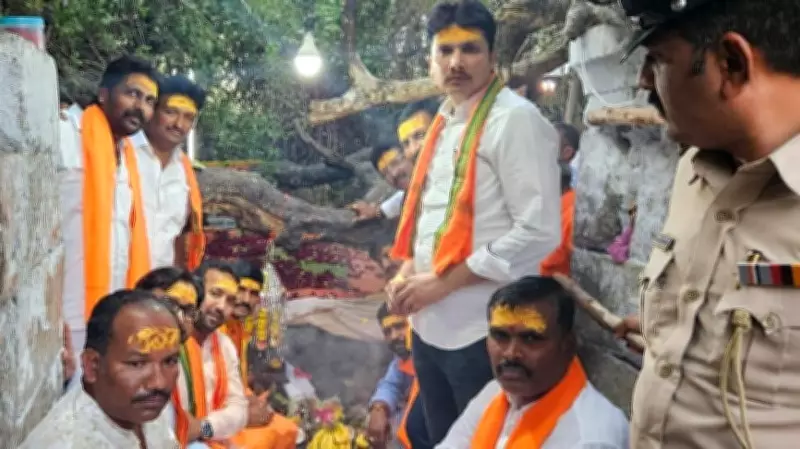
Supreme Court Declines to Hear Plea Against Puja at Ladle Mashak Dargah on Mahashivaratri
The Supreme Court of India has refused to entertain a petition that sought to challenge the performance of puja at the Ladle Mashak Dargah during the festival of Mahashivaratri. In a significant ruling, the apex court emphasized that the petitioner's request for a declaration that the property is a duly notified waqf property falls under the jurisdiction of the Waqf Tribunal, not the Supreme Court.
Court's Rationale and Jurisdictional Clarification
The top court, in its decision, stated that the petitioner was essentially seeking a legal declaration regarding the status of the Ladle Mashak Dargah as a waqf property. According to Indian law, matters related to waqf properties, including disputes over their notification and management, must be adjudicated by specialized Waqf Tribunals established under the Waqf Act. The Supreme Court clarified that it does not have the primary jurisdiction to decide such issues, thereby directing the petitioner to approach the appropriate tribunal for resolution.
This ruling underscores the importance of adhering to legal procedures and jurisdictional boundaries in property disputes, particularly those involving religious sites. By refusing to intervene, the Supreme Court has reinforced the role of the Waqf Tribunal in handling waqf-related matters, ensuring that such cases are dealt with by experts in the field.

Background and Implications for Karnataka
The case originated from Karnataka, where the Ladle Mashak Dargah is located, and has drawn attention due to its intersection of religious practices and property rights. Mahashivaratri, a major Hindu festival dedicated to Lord Shiva, often sees various rituals and pujas performed across the country. The plea against the puja at the dargah highlighted tensions over the use of the site, but the Supreme Court's decision prioritizes legal mechanisms over immediate judicial intervention.
This development is expected to set a precedent for similar disputes in India, encouraging parties to first exhaust remedies available under specific tribunals before approaching higher courts. It also reflects the judiciary's commitment to maintaining a structured legal framework for resolving conflicts involving religious and waqf properties.
As of February 12, 2026, the matter remains pending before the Waqf Tribunal, where further proceedings will determine the official status of the Ladle Mashak Dargah. The Supreme Court's refusal to entertain the plea does not imply a judgment on the merits of the case but rather a procedural directive to follow the established legal pathway.