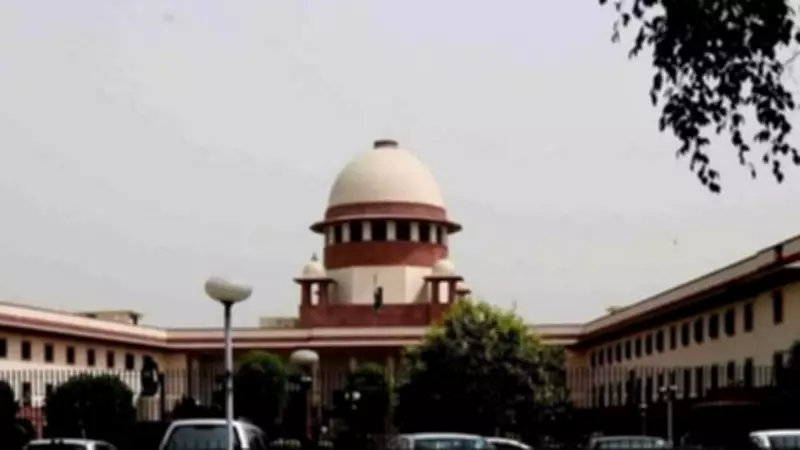
Supreme Court Bench Criticizes Trade Unionism for Industrial Decline
The Supreme Court of India delivered sharp criticism against trade union practices during a hearing on Thursday, with Chief Justice of India Surya Kant stating that trade unions bear significant responsibility for stunting industrial growth and causing factory closures across the nation. The bench, comprising CJI Surya Kant and Justice Joymalya Bagchi, made these observations while considering a Public Interest Litigation (PIL) filed by Penn Thozhilargal Sangam and other trade unions seeking welfare measures, including minimum wage fixation, for domestic workers.
CJI's Strong Remarks on Industrial Impact
Presiding over the two-judge bench, Chief Justice Surya Kant expressed concern about the detrimental effects of trade union activities on traditional industries. "How many industries in this country have been successfully closed, thanks to these trade unions? Let us know the realities also," the CJI remarked. "As children, we used to see all the traditional industries in this country; now, because of these 'jhanda' unions, they have been closed all throughout the country. They don't want to work."
The CJI's comments highlighted a broader judicial perspective that while exploitation of workers undoubtedly exists, the methods employed by trade unions might not represent the most effective solution. The bench acknowledged the exploitation faced by domestic workers but suggested alternative approaches to addressing these issues.

Judicial Concerns About Minimum Wage Implementation
Justice Joymalya Bagchi, while agreeing that exploitation occurs, proposed different strategies for combating it. "Of course, exploitation is there, undoubtedly. But the means should have been different to stop that exploitation," Justice Bagchi stated. "People should have been made more aware of their individual rights. People should have been made more skilled instead of using them as manual labour; there could be several other reforms which should have been done."
During the proceedings, Senior Advocate Raju Ramachandran, representing the petitioners, cited Singapore's model where domestic workers must be registered with provisions for weekly off days and proper wages. However, CJI Kant expressed reservations about implementing similar measures in India's context, warning about unintended consequences.
Potential Consequences of Legislative Intervention
"Sometimes in our anxiety to bring a non-discriminatory perspective through legislative means, we unwillingly lead to further exploitation," the CJI cautioned. "Look at the need for employment in this country. It's a question of demand and supply. Demand is far lower than supply... People are being exploited like anything. If you fix minimum wages, people will refuse to hire, and this will further contribute to their hardship."
The CJI further elaborated on how trade union leaders might exploit such situations, suggesting that minimum wage fixation could lead to excessive litigation. "If you fix a minimum age, these very so-called leaders will make sure that every household is dragged into litigation," he warned.
Agency Exploitation and Broken Trust
CJI Kant shared personal observations about the growing trend of service provider agencies in major cities, which he claimed often exploit domestic workers despite charging premium fees. Recounting an experience from the Supreme Court's own hiring practices, he revealed that while the court paid an agency Rs 40,000 for skilled employees, "actually those poor girls got only Rs 19,000."
The CJI emphasized the importance of trust in domestic employment relationships, noting that millions of families treat domestic help as extended family members. "The moment you break this trust between the domestic help and the family who is engaging them... If you start hiring them through these agencies, what will happen? The elderly are harassed. Suddenly, you will find that some heinous offences are committed," he explained, suggesting that agency-mediated employment lacks the human bond that prevents such incidents.

Existing Legal Framework and Judicial Disposition
Justice Bagchi pointed out that domestic workers are not entirely without protection, noting that "the Unorganised Workers' Social Security Act takes care of the basic needs of medical health and other consequential benefits." This acknowledgment indicated that while the court recognized the petitioners' concerns, it also noted existing safety nets for unorganized workers.
The bench ultimately disposed of the plea, stating that granting the requested relief would require judicial intervention in legislative policy matters. The court noted that various state governments are actively considering the issue and expressed hope that they would develop appropriate mechanisms to improve domestic workers' conditions and prevent exploitation.
This judicial proceeding highlights the complex balance between worker protection and economic practicalities, with the Supreme Court emphasizing the need for nuanced solutions that consider India's employment landscape while addressing genuine concerns about worker exploitation.